Flower/Plants, Derivative Products, and Edibles
21 Count
GCMS
ACS Laboratory offers a GC-MS residual solvent test that screens for 55 to 67 analytes in one run. This max-analyte panel can satisfy the strictest U.S. state requirements, so hemp brands nationwide can feel confident bringing products to market.
Our residual solvents testing detects common extraction chemicals, including butane and ethanol, to verify clean products. Brands use this panel for solvent screening in hemp extracts during R&D and to confirm national compliance across multiple state limits.
Flowers / Biomass / Derivatives / Edibles
55 Count
GCMS
Additional solvents for Colorado brands (12) *
Residual solvents can remain in hemp and cannabis extracts after the production of wax, oils, or concentrates. Some are highly toxic, others have limited use, and a few pose low risks. Understanding the classes and performing class 1 solvent testing cannabis is critical for safety, COA review, and retailer acceptance.
Includes benzene, a known carcinogen. Class 1 solvent testing cannabis is essential because no safe exposure threshold exists.
Includes chloroform, methanol, toluene, and n-butane. These compounds are permitted only at low ppm levels and require careful monitoring.
Includes ethanol, acetone, and n-pentane. Though rules vary by state, these solvents are generally safe at higher ppm thresholds.
Cannabis residual solvent testing with an ISO/IEC 17025:2017 A2LA-accredited laboratory like ACS ensures products meet action limits and pass compliance reviews.
Even the most consistent extraction process can leave behind trace solvents when conditions vary between runs. Products like shatter or wax are especially difficult to purge because their surface area makes it harder for solvents to evaporate.
Producers can reduce contamination risks by refining evaporation methods, extending purge times, and applying deeper vacuum cycles. Still, no method eliminates variability in natural plant material. The most reliable way to protect patients and consumers is to partner with an ISO/IEC 17025:2017 A2LA accredited laboratory like ACS for regular residual solvent testing.

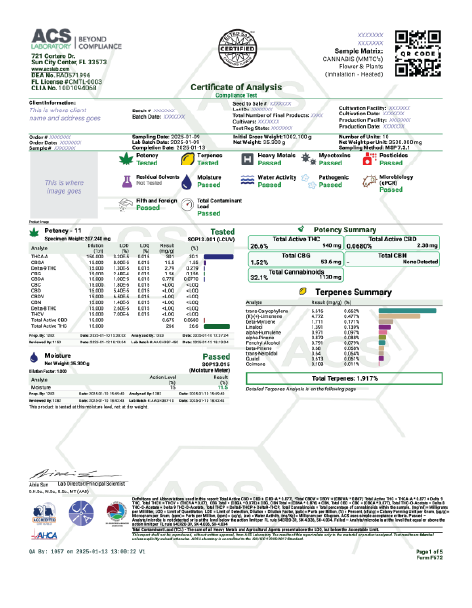
Every ACS Certificate of Analysis (COA) includes residual solvent pass/fail status, quantitative data, and state-specific formatting. Reports also feature QR-coded traceability, allowing retailers and regulators to instantly verify results.
COAs extend beyond solvent data to support cannabinoid label accuracy testing. This integration confirms potency claims, verifies label compliance, and safeguards consumer confidence. By linking solvent and potency results, ACS helps brands avoid costly recalls and maintain approval with state agencies.
Standard turnaround for residual solvent testing is three to five business days, with rush options available. Sample size requirements range from 1–17 grams, depending on the product type and panel. Our team confirms exact amounts when you place your order.
Diacetyl, or 2,3-butanedione, is a flavoring compound linked to severe respiratory conditions when inhaled at high levels. Testing confirms products remain within safe limits and acceptable to regulators and retailers. ACS includes diacetyl in comprehensive solvent panels to protect consumers.
Yes. Even when inputs pass screening, final products can pick up trace amounts of solvents during manufacturing. Residual solvent testing for edibles, beverages, and concentrates ensures compliance with extract limits and provides accurate results for Certificates of Analysis.
ACS Laboratory’s full panel covers 67 solvents. This includes high-risk chemicals such as benzene, chloroform, and toluene, and common extraction agents like butane, ethanol, and acetone. The complete list is available in our GC-MS panel dropdown.
State residual solvent limits for cannabis products vary depending on jurisdiction. Each state sets its own ppm thresholds for individual analytes, and compliance requires products to remain below those action levels. ACS Laboratory tracks every update and provides panels designed to meet state and national requirements.