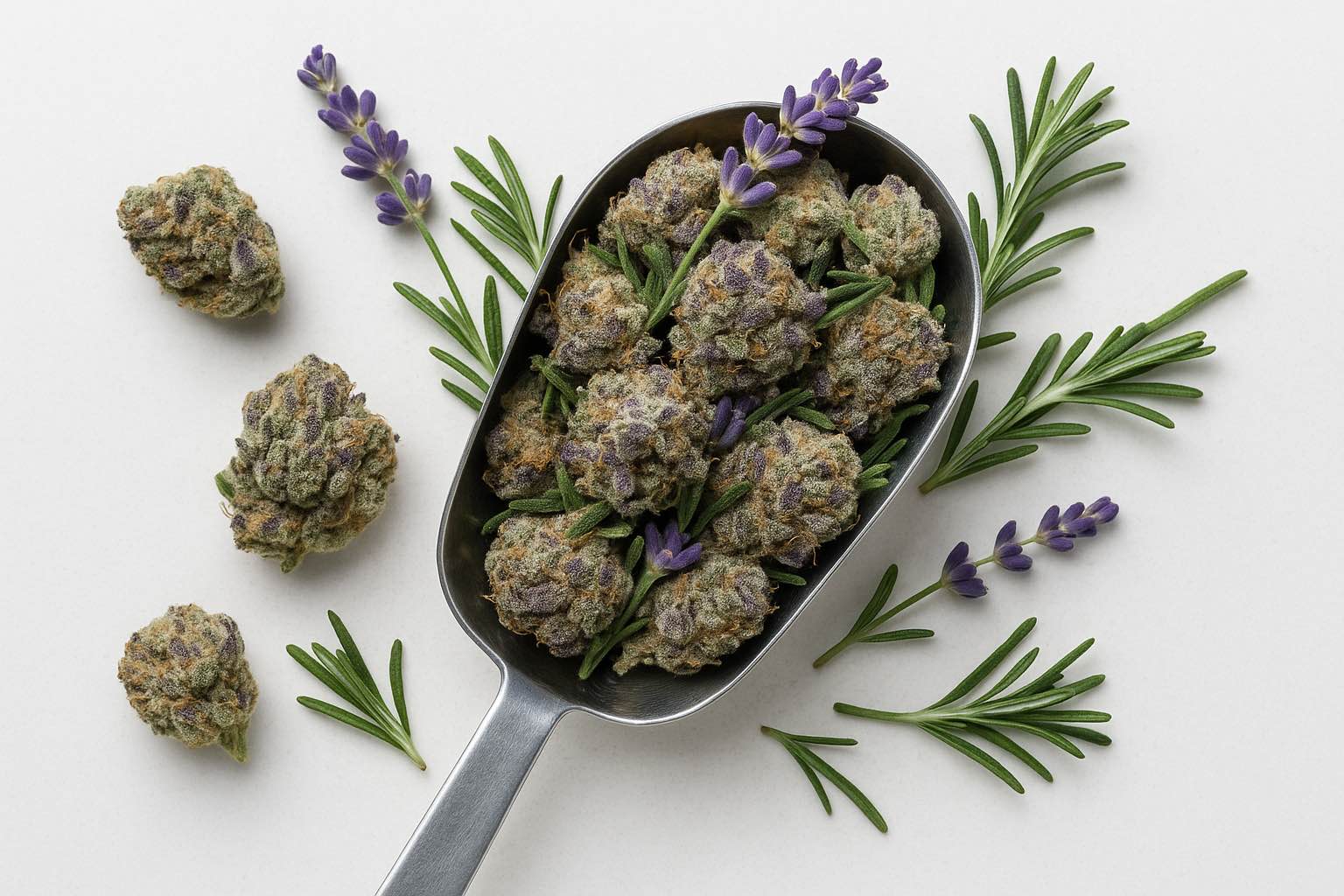
Linalool gives many cannabis strains their floral, lavender-like aroma and helps explain why some products feel more calming or relaxing than others.
Early research links linalool to stress relief, pain support, sleep, and inflammation pathways, but most studies still come from lab and animal models.
The "entourage effect" theory suggests that linalool may interact with other terpenes and cannabinoids such as tetrahydrocannabinol (THC) and cannabidiol (CBD), though scientists still debate the strength of these effects in people.
Strain names like Lavender or Purple Kush do not guarantee high linalool levels, which is why terpene testing and certificates of analysis (COAs) matter more than marketing labels.
At-A-Glance Summary
Linalool is a floral terpene found in cannabis, lavender, citrus plants, basil, and many other aromatic plant species. Research recognizes this fragrant compound for its calming, anti-anxiety, anti-inflammatory, pain-modulating, and neuroprotective effects, although most evidence remains preclinical.
Cannabis research also explores whether linalool contributes to the “entourage effect,” where terpenes and cannabinoids may influence each other’s effects. Some research shows promise, while other evidence remains mixed.
This terpene guide explains what linalool is, how it affects plants and humans, the latest research on its therapeutic potential, which cannabis products tend to contain more linalool, and why terpene testing matters more than strain labels.
What is Linalool?
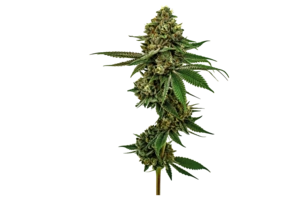
Linalool is a floral, woody-smelling terpene produced in the resin glands of cannabis flower. (source) It is usually a minor component by weight but a major contributor to aroma and an important bioactive molecule with significant therapeutic potential. (source)
Chemical nature and origin
Linalool is a monoterpene, meaning it belongs to a class of small, volatile aromatic compounds that evaporate easily and influence how cannabis smells and feels.
Linalool also occurs in lavender, basil, coriander, and other aromatic plants and extracts, which is why people often associate it with floral, herbal, and calming scent profiles.
Therapeutic potential
Preclinical research links linalool to calming, pain-relieving, and neuroactive effects. Some research suggests it may interact with cannabinoids to alter their effects, though firm evidence in humans remains limited. (source)
What Does Linalool Do for Plants & Humans?
Linalool plays several roles in plant defense and reproduction, suggesting its therapeutic potential in humans.
Research shows that linalool attracts pollinators, especially bees and moths, while certain forms of linalool may also repel insect pests. (source) Studies also link linalool to antimicrobial activity, which may help plants defend themselves against pathogens. (source)
These same biological properties explain why researchers study linalool for human applications, like antimicrobial support, inflammation control, stress relief, sleep support, and pain modulation.
Why Does The Scent Of Linalool Help People Relax?
The relaxing feeling from the linalool scent appears to have less to do with “smelling nice” and more to do with neurobiology.
Research shows that smelling linalool sends signals to the brain, activating specific brain circuits and neurotransmitter systems (especially GABA, endocannabinoids, and opioids). (source) This leads to reduced anxiety‑like behavior, lower stress responses, and increased social approach in animal and early human studies, supporting the idea that linalool‑rich aromas are often experienced as calming.
Research Supporting Linalool Benefits in Cannabis (2026 update)
Current preclinical evidence supports linalool’s potential role in anxiety management, pain relief, inflammation, sedation, and product aroma.
1. Linalool may contribute to calming and anti-anxiety effects.
A 2024 mouse study tested vaporized linalool and β-myrcene, two common cannabis terpenes, and found sex-specific effects. (source)
Female mice showed anxiolytic effects after repeated vapor pulls for over 30 minutes.
Male mice showed anxiolytic effects after a single vapor hit.
The study also found that low levels of linalool combined with cannabidiol (CBD) produced synergistic anxiolytic effects in female mice, but not in male mice.
2. Linalool may support pain and inflammation pathways.
Research suggests linalool may affect how the body processes pain and inflammation.
A 2025 review on cannabis terpenes and chronic pain found that linalool and other terpenes can influence several pain-related systems to influence how strongly the body detects pain, how nerves send pain messages, and how inflammatory responses build. (source)
These systems include:
transient receptor potential (TRP) channels
adenosine receptors
cannabinoid receptor type 2 (CB2)
inflammatory pathways such as nuclear factor kappa B (NF-κB) and cyclooxygenase-2 (COX-2).
A 2024 mouse study also found that cannabis terpenes, including linalool, reduced pain-like responses in models of nerve-related and inflammation-related pain. Researchers linked part of this effect to adenosine A2A receptors, which help regulate inflammation and pain signaling. (source)
3. Linalool may be part of the “entourage effect,” but the evidence remains mixed.
Research shows that linalool may interact with cannabinoids as part of the “entourage effect,” the theory that cannabis compounds produce different effects together than they do alone. However, the data does not always align.
Potential synergy
A 2021 Scientific Reports study found that linalool and several other cannabis terpenes synergized to cause cannabis-like responses in mice, including reduced pain sensitivity, slower movement, lower body temperature, and temporary stiffness. (source)
These findings relate to the entourage effect because the terpenes did not only act on their own; some effects became stronger when researchers combined them with a compound that activates cannabinoid receptors similar to THC.
Individual Effects Only
A 2024 systematic review recognized linalool as an "influencer" with established individual therapeutic potential to alleviate mild symptoms of mental stress and exhaustion and to aid sleep.
The paper concluded that while exploratory research suggests that linalool has overlapping benefits, the hypothesis that it provides an additive or synergistic enhancement of cannabinoid efficacy (the entourage effect) remains unproven. (source)
Do Terpenes Like Linalool Get You High?
Terpenes like linalool do not produce the intoxicating “high” associated with tetrahydrocannabinol (THC). THC drives cannabis intoxication because it activates cannabinoid receptors in the brain. Linalool influences mood, relaxation, sleep, and stress pathways, but that does not make it intoxicating in the same way as THC.
In fact, studies show that linalool leaves the body quickly and doesn’t accumulate in fatty tissues, so this terpene is unlikely to alter one’s cognitive state radically. (source)
What Cannabis Strains Have the Most Linalool?
Linalool is usually a minor terpene (0.01–0.5%), dominant only in some indica‑leaning strains, yet pharmacologically potent. (source) THC‑dominant chemotypes (aka strains with higher THC levels) tend to have more linalool than CBD‑dominant chemotypes. (source)
Additionally, linalool is positively correlated with total CBG, total THCV, limonene, and pinene. Thus, cannabinoid and terpene profiles are linked.
A few indica strains that usually test higher in linalool include: (source; source)
Purple Kush
1st Generation Diablo
Black Mamba
Skywalker
Neptune OG
True OG
Terpene and cannabinoid formulation matters more than strain labels
Strain names can offer clues about aroma and expected effects, but they do not reliably confirm linalool content because cannabis chemistry changes across: (source)
Genetics
Growers
Batches
Cultivation conditions
Harvest timing
Drying
Curing
Storage
A cultivar sold as “Lavender” or “Granddaddy Purple” may test higher in linalool in one batch and much lower in another.
The most reliable way to find linalool-rich hemp or cannabis is to review the product’s certificate of analysis (COA) and look for terpene test results. A tested chemical profile gives consumers and brands a clearer picture than indica, sativa, hybrid, or strain labels alone.
Why Terpene Testing Matters
Terpene testing helps confirm what strain names and product descriptions cannot. A cultivar name may suggest a floral, calming, or lavender-like profile, but only laboratory testing can show how much linalool and other terpenes are actually present in that specific batch.
For consumers, terpene test results provide a clearer way to compare hemp and cannabis products beyond indica, sativa, or hybrid labels. A product with measurable linalool may offer a different aroma and sensory profile than one dominated by myrcene, limonene, pinene, or caryophyllene.
Terpene data can also help consumers choose products based on tested chemistry rather than marketing language alone.
For brands, terpene testing supports consistency, formulation, and quality control. Linalool levels can shift during cultivation, drying, curing, extraction, and storage, so testing helps verify whether the final product matches the intended profile.
That data can also support more transparent labeling, stronger product development, and better batch-to-batch comparison.
Terpene Testing with ACS Laboratory
ACS Laboratory’s terpene profiling panel measures 38 terpenes across flowers, biomass, derivatives, and edibles, providing brands with a practical way to track aroma chemistry from plant material to finished products. The panel includes linalool alongside major aroma compounds like:
beta-myrcene
R-limonene
alpha-pinene
beta-pinene
trans-caryophyllene
alpha-humulene
terpinolene
eucalyptol
guaiol
geraniol
ACS uses GC-MS/GC-FID (gas chromatography-mass spectrometry/gas chromatography-flame ionization detection) to identify and quantify volatile compounds. These methods work well because they can separate complex aroma compounds, identify individual terpenes, and measure their concentration across different product types.
Research suggests linalool appears more often in higher-THC chemotypes than in cannabidiol (CBD)-dominant chemotypes, but it can occur in both hemp and cannabis products. Actual terpene content depends more on the product’s tested chemical profile than its legal classification.
Why do some cannabis products smell floral or lavender-like?
Floral and lavender-like aromas in cannabis often come from linalool and related terpenes. The final scent depends on the full terpene profile, which can combine floral notes with citrus, pine, fuel, earthy, or fruity compounds.
Can two products with the same strain name have different linalool levels?
Yes. Cannabis chemistry can vary significantly across growers, batches, cultivation methods, curing, extraction, and storage conditions. Two products sold under the same strain name may test very differently for linalool and other terpenes.
What is the best way to ingest linalool in cannabis?
There is no proven “best” way to ingest linalool in cannabis, but research suggests consumers should be cautious with high-heat vaping, dabbing, or overheated concentrates. (source) High temperatures can degrade terpenes and cannabinoids into potentially harmful byproducts, so lower-risk options may include tested edibles, tinctures, or carefully temperature-controlled vaporization with quality-tested products.
Where Else Does Linalool Appear in Nature and Consumer Products?
Linalool occurs naturally in hundreds of aromatic plants, including lavender, basil, coriander, mint, citrus fruits, hops, and cannabis. Its floral, herbal scent makes it a common ingredient in perfumes, soaps, lotions, candles, cleaning products, and aromatherapy oils.
Need a Test or Have a Question
Call Us at 813-670-9197 or Click to send us a message.
















.png)




.png)
.png)
.png)
.png)

