Flower/Plants, Derivative Products, and Edibles
11 cannabinoids
LCUV
ACS Laboratory offers quality assurance/quality control (QA/QC) safety panels that screen for pesticides, heavy metals, residual solvents, microbes, mycotoxins, moisture, and water activity to safeguard patients and support reliable formulations. These results allow Florida cultivators and manufacturers to identify risks, improve processes, and move into state submission with confidence.
Flowers / Biomass / Derivatives / Edibles
21 Count
GCMS
Flowers / Biomass / Derivatives / Edibles
67 Count
GCMS / MS* and LCMS / MS
Flowers / Biomass / Derivatives / Edibles
4 Count
ICPMS
Flowers / Biomass / Derivatives / Edibles
7 Count
qPCR Technology, Microarray
Flowers / Biomass / Derivatives / Edibles
5 Count
ICPMS
Flowers / Biomass / Derivatives / Edibles
7 Count
qPCR Technology, Microarray
Flowers / Biomass / Derivatives / Edibles
Moisture
Moisture Meter (SOP13.015)
15%
11.5%
Flowers / Biomass / Derivatives / Edibles
Water Activity
Water Activity Analyzer (SOP13.016)
0.65 aw
0.50 aw
Florida MMTCs rely on cannabis terpene testing in Florida to highlight cultivar profiles and differentiate products in a competitive market. ACS Laboratory provides detailed terpene and flavonoid analysis as part of our optional MMTC testing, so brands have insights to move beyond potency to showcase aroma, flavor, and therapeutic potential.
Flowers / Biomass / Derivatives / Edibles
38 Count
GCMS/GCFID
Flowers / Biomass / Derivatives / Edibles
16 Count
LCMS/MS
Florida MMTCs use stability testing to confirm that medical cannabis products retain potency and safety over time. Partnering with a state-compliant cannabis lab in Florida, like ACS Laboratory ensures each batch is tracked under controlled conditions to validate expiration dates and patient safety.
These results support Florida medical marijuana COA testing through verified lab reports that guide internal R&D, strengthen quality control, and prepare products for compliance submission.
Simulates three months of real-time storage conditions in just 10 days to provide early insight into product stability.
Flowers/Plants, Derivative Products, and Edibles
Stability Chamber
LCUV
Simulates three months of real-time storage conditions in just 20 days to provide early insight into product stability.
Flowers/Plants, Derivative Products, and Edibles
Stability Chamber
LCUV
Simulates three months of real-time storage conditions in just 40 days to provide early insight into product stability.
Flowers/Plants, Derivative Products, and Edibles
Stability Chamber
LCUV
Tracks product stability over 90 days under recommended storage conditions, delivering accurate data on potency and safety.
Flowers/Plants, Derivative Products, and Edibles
Stability Chamber
LCUV
Tracks product stability over 183 days under recommended storage conditions, delivering accurate data on potency and safety.
Flowers/Plants, Derivative Products, and Edibles
Stability Chamber
LCUV
Tracks product stability over 365 days under recommended storage conditions, delivering accurate data on potency and safety.
Flowers/Plants, Derivative Products, and Edibles
Stability Chamber
LCUV
Florida MMTCs rely on early virus and pathogen screening to protect mother plants, genetics, and crop consistency during R&D. Viral infections such as Hop Latent Viroid, Lettuce Chlorosis Virus, and Cannabis Cryptic Virus are increasingly common and can reduce THC content by up to 70%.
Partnering with ACS Laboratory for early Plant Health testing for routine screening helps cultivators identify risks before compliance and safeguard yields.
Leaves, Flowers, Plants
3 Count
qPCR
Submitting medical cannabis samples to ACS is a simple process that keeps your R&D and compliance testing on track. We guide you through chain-of-custody procedures so every submission is secure.
As a Florida MMTC, you can use our licensed courier driver service to pick up samples at your location.
Once we receive your products, we begin testing right away and send results to your inbox, with secure Certificate of Analysis (COA) storage in our customer portal for easy access.

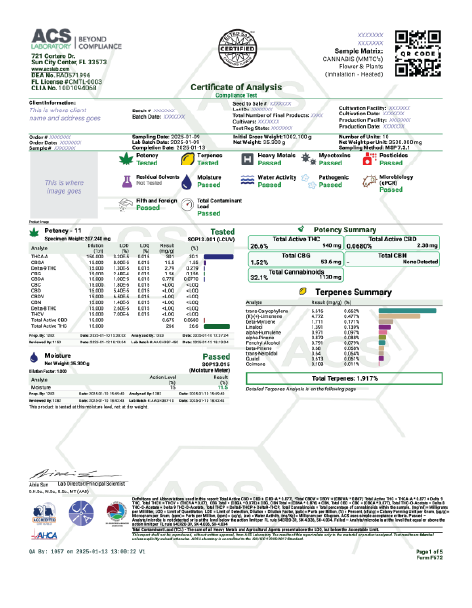
When you R&D test with ACS, you receive detailed Certificates of Analysis (COAs) that show potency, safety, and quality results for each product. These reports giving you the chance to refine formulations, improve consistency, and prepare for compliance.
As a state-compliant cannabis lab in Florida, we provide the same level of rigor in R&D as in compliance testing, so you know your results will hold up. Our Florida medical marijuana COA testing also includes secure storage in our customer portal with QR code access for easy reference.
The federal government designates psilocybin mushrooms to be a Schedule 1 controlled substance that has no medicinal value and therefore there are no federal regulations designed for testing mushrooms. Because psilocybin and psilocin are Schedule 1 substances, handling or possessing them without DEA authorization is a federal crime and punishable under law. However, the DEA does afford companies the ability to apply for federal psilocybin registration. Under this regulation, a company can be allowed to conduct any of seven activities, including manufacturing, distribution, reverse distribution, research, import, export, and chemical analyses.
Yes, to grow psychedelic mushrooms in the United States, the company must be approved for federal psilocybin regulation with the DEA or in a state with a regulatory agency set up to govern the use of mushrooms, such as Oregon. In order to grow functional mushrooms, cultivators do not typically need a license.
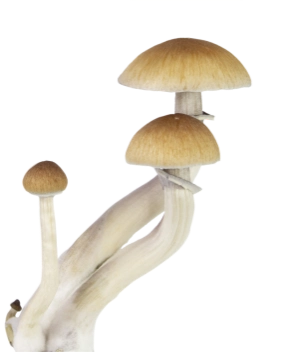
Functional Mushrooms can be tested for Pesticides (FL -list and action levels), Mycotoxins (FL list and action levels), Residual Solvents for Extracts (FL list and action levels), Heavy metals (FL list and action levels), Microbiological (FL Compliance 1), Water activity and moisture (useable)What kind of mushroom products can you test?We analyze and test a variety of common mushrooms, finished products, and delivery vehicles, including dried, chocolates, tinctures, gummies, and capsules.
Psychedelic Mushrooms are tested for the potency of Psilocybin, Psilocin ,Harmine, Harmane, Baeocystin, Norbaeocystin, Norpsilocin, Aeruginascin, 4-hydroxy TMT. They can also be tested for 1. Pesticides (FL -list and action levels) 2. Mycotoxins (FL list and action levels) 3. Residual Solvents for Extracts (FL list and action levels) 4. Heavy metals (4) (FL list and action levels) 5. Microbiological (FL Compliance 1) 6. Water activity and moisture (useable)
Potency testing, for psilocybin, psilocin, and quantification for other active compounds and amino acids, is extremely accurate when quantifying a lower dose, as well as in larger dosages, as the measurements can be quantified to 1/10th of 1% and 1/10th of a milligram and measured in parts per billion.
Mushroom products are tested through a number of quantitative testing measures and analytical instruments, including HPLC/MSMS/HPLCUV, GC/MS, and ICP/MS.
Yes. In order to meet state requirements for sale in Oregon, licensees must remain in regulatory compliance with the state’s governing body. In addition, analytical testing is integral to understanding and conveying the quality and contents of your mushrooms. Along with comprehensive and compliant analytical test panels, ACS also offers a la cart R&D testing services for Functional Mushrooms. Select from our wide range of tests to help develop your premium-quality medical mushroom products.