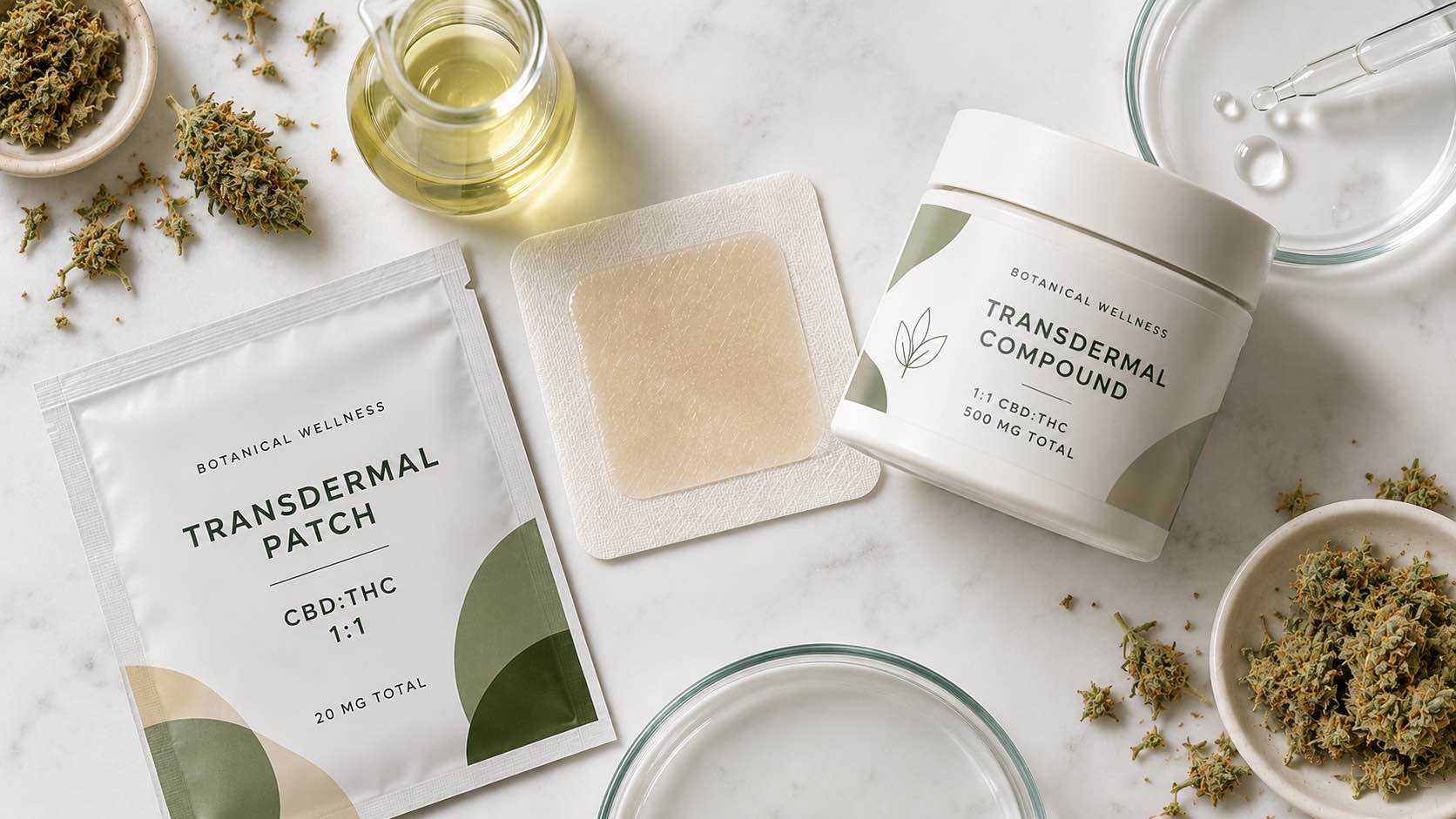
Research on hemp and cannabis transdermal products points to three lab tests brands should request: potency, shelf-life stability, and contaminants. Why?
Most topical and transdermal products have failed to meet their CBD label claims, patch stability data have major gaps, and no published study has screened transdermals for heavy metals, solvents, microbes, or packaging leachables. Lab testing can address these concerns.
The lab testing fix: Potency testing verifies cannabinoid content, including THC, against the label claim.
Problem 2: Cannabinoids Degrade on the Shelf
Cannabinoids break down with exposure to light, heat, and oxygen, and patch formulations don't escape that chemistry. A 2024 study of Eudragit-based patches loaded with THCA and CBDA confirmed stability for at least 90 days, but only at 4 °C. Most retail patches sit at room temperature.
Transdermal research focuses almost entirely on potency, release, and absorption. However extensive cannabinoid research shows that formula and packaging can be significant sources of toxins including:
Hemp absorbs heavy metals from soil, so contaminants can enter a product long before the formula reaches a patch. Adhesives and release liners add another possible source of chemical migration.
The lab testing fix: A full contaminant panel screens transdermal products for pathogenic microbes, heavy metals, mycotoxins, and residual solvents. Stability testing can also track leachables from packaging over time.
Back Every Transdermal Claim With Data
Transdermal brands can close all three research gaps with one lab partner.
ACS Laboratory's transdermal patch testing covers potency, contaminants, and shelf-life stability for hemp patches and gels. The lab holds ISO/IEC 17025:2017 accreditation and DEA registration, and every result arrives on a certificate of analysis (COA) with a QR code for verification.
Ready to test your transdermal products? Contact ACS Laboratory to build a testing plan that backs every label claim with data.
FAQs
Do regulations require transdermal testing?
Requirements vary by state and product type. Hemp products generally need potency testing at minimum, and many states also require contaminant screening. Shelf-life testing is usually voluntary.
Can a mislabeled patch cause a positive drug test?
Undisclosed THC creates that risk, according to researchers behind the UW–Madison analysis. In the 2024 Journal of Analytical Toxicology study, none of the five products tested produced a positive urine test.
How long does a transdermal patch stay potent?
Shelf life depends on formulation, packaging, and storage. Published data confirms 90-day stability under refrigeration for one patch design. Most research does not explore stability under normal storage conditions. Shelf-life testing sets the timeline for each specific product.
What does a full transdermal contaminant panel include?
ACS Laboratory's full panel transdermal testing covers pathogenic microbiology, heavy metals, mycotoxins, and residual solvents, with potency testing available as an add-on.
Need a Test or Have a Question
Call Us at 813-670-9197 or Click to send us a message.