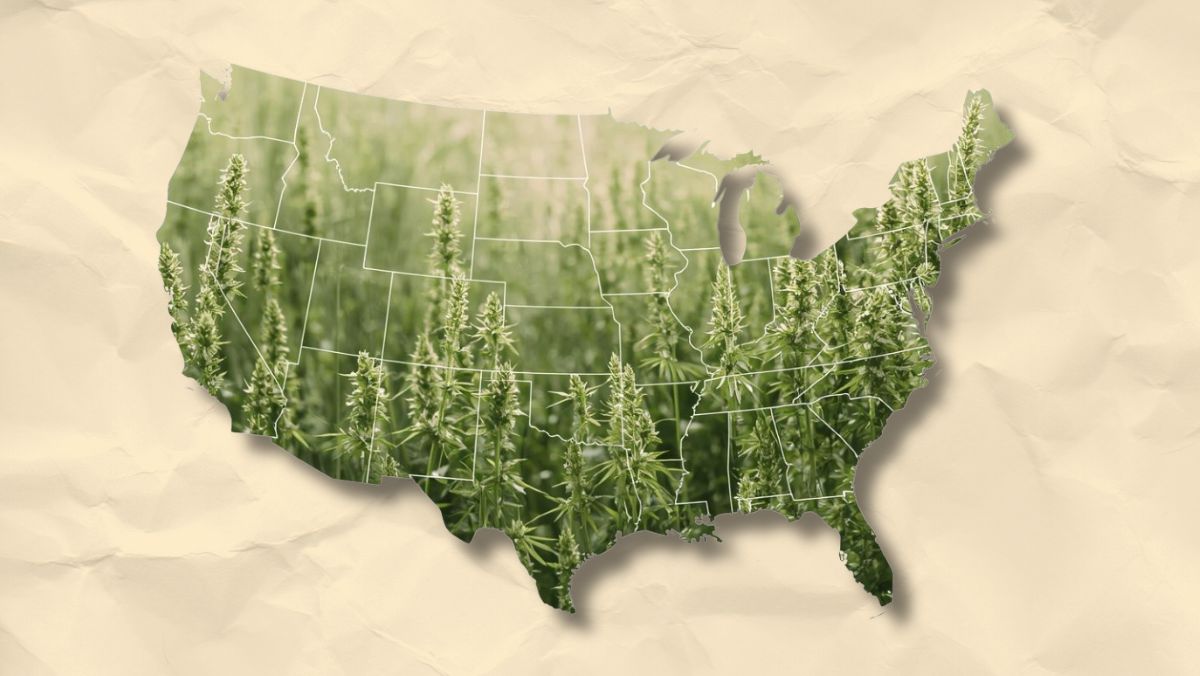
Compliant hemp testing in 2026 requires partnering with accredited laboratories that meet strict federal and state rules. Regulators now expect validated potency data, full safety panels, and clear labeling, making third-party testing essential for any brand that sells or ships hemp products. State laws vary widely, and compliance depends on where the product will be sold—not where it is made.
ACS Laboratory supports these requirements and is prepared to help brands remain compliant across all 50 states.
Where to Get Compliant Hemp Testing in 2026
Compliant hemp testing in 2026 comes from laboratories that meet both national accreditation standards and the specific designations required by the states where products will be sold.
Designations such as “ISO/IEC 17025:2017 Accreditation by A2LA,” DEA Registration, and USDA approval show that a hemp analytical testing lab can generate reliable potency data, handle federally controlled materials, and test THC concentration under the US Domestic Hemp Production Program.
However, several states go further by requiring laboratories to hold explicit approvals or recognition from their agriculture or health departments for pre-harvest and final product testing.
State agencies such as Florida Department of Agriculture & Consumer Services (FDACS) in Florida, the Georgia Department of Agriculture, and New York’s Office of Cannabis Management oversee requirements for registered hemp testing facilities. These states ensure labs follow their sampling, testing, and COA formatting rules—regardless of a lab’s national credentials.
Hemp testing laboratories that meet federal expectations, operate across multiple jurisdictions, and maintain state-specific registrations provide the strongest compliance protection for national hemp brands.
What Compliance Requires in 2026
Compliance in 2026 begins with meeting the federal hemp definition, but each state determines how those rules are enforced. Roughly a dozen states still require only pre-harvest total THC testing before hemp can enter the supply chain. These states follow USDA-aligned sampling methods and rely on early potency verification as their primary safeguard.
Most states, however, now enforce end-product testing for extracts, edibles, beverages, vapes, tinctures, and topicals. These rules typically require:
- Potency testing to confirm total THC thresholds and label accuracy
- Safety panels for pesticides, heavy metals, residual solvents, microbes, and mycotoxins
- Water activity and stability testing, where shelf life or product type demands it
- Packaging and labeling compliance tied directly to COA data
Some states add unique requirements. For instance, Georgia mandates updated THC limits and full contaminant panels under Senate Bill 494. And Louisiana restricts inhalable hemp products and requires full contaminant panels.
Federal policy shifts are likely to shape these requirements further. The new federal crackdown on intoxicating hemp derivatives signals tighter oversight of total THC calculations, manufacturing processes, and finished-product safety. These changes are set to take effect by the end of 2026.
How State Rules Shape Your Laboratory Requirements
State agencies oversee hemp at different stages of production, and their rules determine which laboratories can perform compliant testing. Understanding who regulates pre-harvest crops and who regulates finished goods helps brands choose the right laboratory for each market.
Examples of state-by-state hemp oversight
Florida
The Florida Department of Agriculture & Consumer Services (FDACS) oversees both pre-harvest hemp plants and finished hemp extracts in the state. FDACS or an approved agent must collect pre-harvest samples, and designated laboratories, such as ACS Laboratory, can perform official THC testing.
Finished hemp products fall under Rule 5K-4.034 and require potency testing, full contaminant panels, water activity where applicable, and compliant packaging and labeling. Only FDACS-recognized laboratories may issue COAs that qualify products for retail sale.
Georgia
The Georgia Department of Agriculture (GDA) regulates pre-harvest and finished-product testing. GDA-approved sampling agents must collect official crop samples, and state-registered laboratories may perform THC analysis.
Finished hemp products must undergo full-panel testing under Rule 40-32-5-.02, which includes cannabinoids, pesticides, heavy metals, residual solvents, mycotoxins, and microbial contaminants. Georgia also sets THC-per-serving and inhalation safety limits that laboratories must verify.
Louisiana
The Louisiana Department of Agriculture & Forestry (LDAF) oversees hemp cultivation and performs all pre-harvest THC testing itself. Private laboratories cannot issue compliant crop results.
Finished consumable hemp products fall under the jurisdiction of the Louisiana Department of Health (LDH), which requires a five-panel test for cannabinoids, pesticides, solvents, heavy metals, and microbials. LDH also enforces THC-per-serving limits and packaging standards, which laboratories must confirm on COAs.
New York
The New York State Department of Agriculture & Markets (site) regulates pre-harvest hemp plants under the USDA-approved state plan and requires sampling by state-approved agents.
Finished cannabinoid hemp products fall under the Office of Cannabis Management (OCM). OCM requires cannabinoid profiling, contaminant testing, THC-per-serving limits, QR-code COAs, and stringent label compliance. Laboratories must meet OCM’s method, analyte, and reporting standards to issue compliant results.
Colorado
The Colorado Department of Agriculture (CDA) oversees pre-harvest hemp sampling and THC testing. CDA-approved agents must collect samples, and only CDA-approved laboratories may test plants for compliance.
Finished hemp products fall under the jurisdiction of the Colorado Department of Public Health and Environment (CDPHE), which certifies laboratories and enforces potency, safety, ingredient, and labeling requirements as outlined in 6 CCR 1010-24. Colorado distinguishes between industrial hemp, consumable hemp, and intermediate products, each with panel requirements that laboratories must meet.
Utah
The Utah Department of Agriculture and Food (UDAF) regulates hemp cultivation and performs all pre-harvest testing at state facilities. Private laboratories cannot perform compliant THC testing for crops.
Finished cannabinoid products also fall under UDAF and must comply with R66-31 and R66-35, which require cannabinoid potency testing, screening for artificially derived cannabinoids, evaluation of foreign matter, and full contaminant panels. Only laboratories capable of meeting Utah’s analyte lists and action limits may support compliant retail distribution.
Texas
The Texas Department of Agriculture (TDA) oversees pre-harvest sampling and THC testing. TDA-licensed agents collect samples within 15 days of harvest, and TDA-licensed laboratories such as ACS Laboratory may perform the official testing.
Finished consumable hemp products fall under the jurisdiction of the Texas Department of State Health Services (DSHS) and TABC (Texas Alcohol Beverage Commission). These products must undergo potency testing, contaminant screening, and label verification, including QR-coded COAs and disclosure of measurement uncertainty.
Pennsylvania
The Pennsylvania Department of Agriculture (PDA) oversees industrial hemp cultivation and requires only pre-harvest THC testing within 30 days of harvest. PDA-certified agents must collect samples, and PDA-approved laboratories must follow USDA-aligned THC methods. The state does not impose finished-product testing requirements, though processors often test voluntarily to meet retailer and multi-state distribution standards.
*This list is not exhaustive and does not constitute legal advice. Contact your legal representative and state licensing bodies to confirm compliance with lab testing regulations.
How To Confirm Your Laboratory Meets Your State’s Requirements
The best way to ensure compliance is to start with where you sell and what you produce, then choose a laboratory that meets the specific rules in those markets.
Steps to confirm compliance:
- Identify your destination markets.
Determine the states where your hemp products will be sold, since each jurisdiction sets its own testing rules and recognizes only certain laboratories.
- Review the product types you manufacture.
Clarify whether you produce flower, extracts, edibles, beverages, vapes, topicals, or nanoformulations, because states often require different analyte panels for each category.
- Check state recognition for your laboratory.
Verify that the laboratory is approved, registered, designated, or certified by the relevant agency in each market, such as FDACS, GDA, LDH, UDAF, CDPHE, OCM, TDA, CDA, or PDA.
- Confirm ISO/IEC 17025:2017 by A2LA accreditation.
Ensure the laboratory holds A2LA accreditation for validated potency and safety methods that states expect for official COAs.
- Verify DEA registration.
Confirm that the laboratory is DEA-registered to handle scheduled materials and test cannabinoids regulated under federal law.
- Match the required analytes.
Compare your state’s mandated panel with the laboratory’s capabilities to ensure it can test all required cannabinoids, hydrogenated cannabinoids, solvents, pesticides, metals, microbials, mycotoxins, and foreign matter where applicable.
- Ensure matrix-specific testing support.
Make sure the laboratory can accurately test the product types you produce using methods validated for each matrix.
- Confirm jurisdiction-specific COA formatting.
Verify that the laboratory can issue Certificates of Analysis that meet each state’s formatting rules, including THC-per-serving disclosures, potency ratio verification, QR-code access, batch ID requirements, and labeling attestations.
How the New Federal Ban Could Influence Compliance by Late 2026
Hemp compliance testing will be a moving target in 2026, thanks to the recent federal law that closes the long-standing genetics loophole and redefines which plant materials qualify as legal hemp. Congress enacted this change on November 13, 2025, marking the most significant rewrite of hemp policy since the 2018 Farm Bill.
What the Law Actually Changed
The new federal definition no longer hinges on delta-9 THC alone. Instead, it expands prohibition to include total THC, all THC isomers, and any cannabinoid with “THC-like effects,” as determined by the FDA.
It also bans intermediate or synthesized cannabinoids that the plant does not naturally produce. This shift places many intoxicating hemp products—including those made through chemical conversion—at risk of federal classification as controlled substances after a one-year grace period ending in November 2026.
Significantly, the law does not dissolve existing state hemp programs. States still regulate the cultivation, manufacturing, and retail sales of cannabis. The federal change simply broadens what qualifies as “illegal hemp” at the national level.
Why Enforcement Is Unclear
Congressional researchers (according to Marijuana Moment) say that the FDA and DEA may not have the resources to enforce the ban broadly. Federal agencies may respond similarly to the way they have with marijuana—allowing states to manage most oversight while federal rules remain in the background.
Several lawmakers have also introduced bills that would let states maintain their own hemp-derived cannabinoid frameworks, meaning the federal definition may evolve before enforcement begins.
What This Means for Hemp Testing in 2026
Even with uncertainty, the new definition sets the direction regulators are moving.
- Testing will need to reflect broader cannabinoid categories, not just delta-9 THC.
- Labs must be able to measure total THC, identify THC-like cannabinoids, and distinguish naturally occurring compounds from synthesized or conversion-based derivatives.
- Brands selling across multiple states will need COAs that meet both state regulations and emerging federal expectations.
Brands entering 2026 should work with laboratories that can adapt quickly as definitions change.
Why National Hemp Brands Choose ACS Laboratory
National hemp brands choose ACS Laboratory because they need a partner that can navigate inconsistent state rules, anticipate federal changes, and deliver data that stands up in every jurisdiction where a product may be sold. ACS combines technical expertise with regulatory awareness, helping brands remain compliant as the definition of legal hemp expands, tightens, or shifts throughout 2026.
Here is what ACS has to offer:
- Multi-state regulatory fluency that helps brands match each product to the correct state panel, sampling rule, and COA format.
- Advanced cannabinoid analytics capable of identifying emerging and THC-like compounds as regulators expand their definitions.
- Matrix-specific method validation for beverages, nanoemulsions, edibles, vapes, and botanical blends that require specialized extraction or detection techniques.
- Consistency across scale, allowing national operators to send samples from multiple facilities and receive uniform reporting and data quality.
- Rapid method adaptation when states update analyte lists, potency limits, or labeling requirements.
- Dedicated compliance support, with a team that monitors state legislation, public health rulemaking, and federal updates to help brands plan ahead rather than react.
- Clear, retailer-ready COAs built to satisfy state regulators, distributors, and major retail chains with strict documentation standards.
The Bottom Line
Hemp compliance in 2026 depends on understanding the rules where products will be sold, anticipating upcoming changes, and selecting a laboratory that can meet both state and federal requirements. ACS Laboratory provides the scientific rigor, regulatory alignment, and nationwide support that brands require to remain compliant in a rapidly evolving market.
Contact ACS Laboratory













.png)


.png)
.png)
.png)
.png)

