Florida’s medical marijuana market now serves more than 900,000 registered patients, and demand continues to grow. Yet securing an MMTC license remains one of the most rigorous regulatory undertakings in the state. The application process requires detailed proof of cultivation expertise, financial stability, security controls, readiness for vertical integration, and documented relationships with independent cannabis testing laboratories.
This guide walks through the Florida MMTC licensing process and what prospective applicants should prepare before the next application window opens.
Florida's Medical Marijuana System
Florida voters approved medical marijuana through Amendment 2 in 2016, creating a tightly regulated licensing structure built around vertically integrated Medical Marijuana Treatment Centers (MMTCs).
Vertical integration means each licensed MMTC must:
- cultivate cannabis
- process it into finished products
- transport it
- dispense it directly to patients.
The state does not permit standalone cultivation sites or independent dispensary operators within this framework.
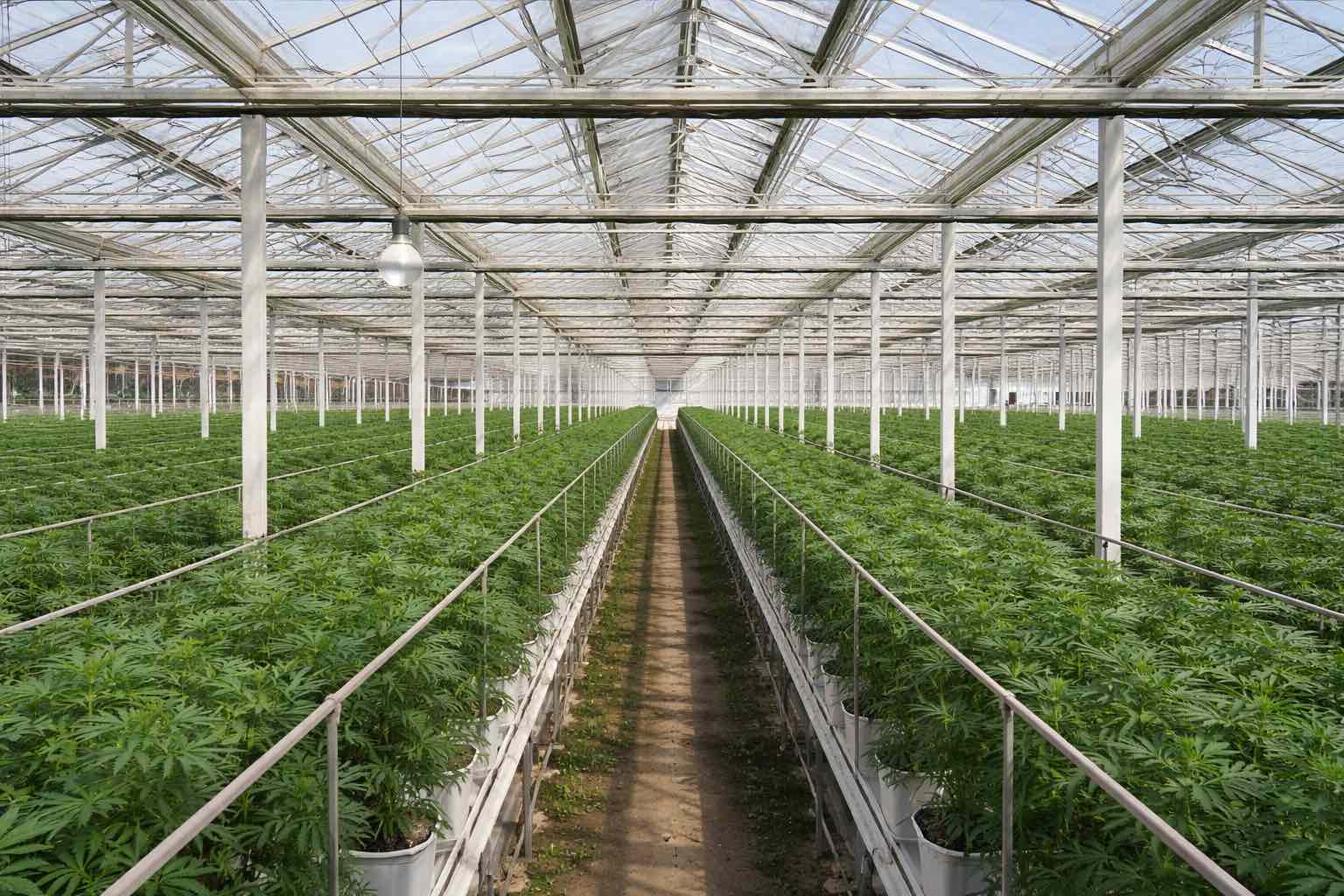
Applicants must also demonstrate readiness across every stage of the supply chain, from growing environments and secure processing facilities to compliant dispensing locations and compliance testing before products reach patients.
MMTC Licensing Eligibility
Securing an MMTC license in Florida is one of the most competitive and capital-intensive processes in the country. Applicants must demonstrate long-term ties to the state, including at least 5 years of Florida residency and continuous operation as a registered nursery in Florida for 30 years. They must also show substantial financial capacity to support full-scale, vertically integrated operations.
Business Requirements
- Registered to do business in Florida for the 5 consecutive years before applying
- Holds a valid nursery certificate of registration from the Department of Agriculture and Consumer Services (s. 581.131)
- 30 continuous years as a Florida-registered nursery
- Ability to operate a vertically integrated cannabis operation (cultivation, processing, and dispensing).
Operational Capacity
- Technical and technological ability to cultivate and produce marijuana
- Ability to secure premises, resources, and personnel
- Ability to maintain full seed-to-sale accountability
- Infrastructure is reasonably located to dispense statewide or regionally
- A licensed MMTC must cultivate, process, transport, and dispense.
Financial Requirements
- Financial ability to operate for the 2-year approval cycle
- Provide certified financial statements
- Post a $5 million performance bond
- Reduced to $2 million if serving at least 1,000 qualified patients
- May substitute bond with irrevocable letter of credit or cash
Personnel Requirements
- All owners and managers must pass a background screening
- Must employ a medical director who is a physician
- Must have employee training programs (HIPAA, compliance, counseling)
Ownership Limits
- An individual may not be involved in more than one MMTC application
- An individual or entity may not hold more than one MMTC license
- An MMTC may not acquire ownership in another MMTC
Diversity Plan
- Must submit a diversity plan promoting minority and veteran involvement
- Must demonstrate the effectiveness of that plan at renewal
See Florida statute 381.986(8) “Medical Use of Marijuana,” and Florida Administrative Code 63-4.002 “Application for Registration of Medical Marijuana Treatment Centers,” for full details.
Step-By-Step: The Florida MMTC Application Process
Florida’s medical marijuana licensing framework follows a tightly structured administrative process with mandatory forms, fixed submission windows, and detailed documentation requirements.
Step 1: Complete the Required Application Form
Eligible Florida MMTC applicants must start the process by completing Form DH8006-OCU-2/2015, “Application for Low-THC Cannabis Dispensing Organization Approval.”
The application may be submitted electronically or in hard copy. However, the delivery must comply with the strict submission window described below.
Step 2: Pay the $60,063 Initial Application Fee
The completed application must include a non-refundable $60,063.00 application fee. Failure to include the fee results in automatic denial before the application is scored or reviewed substantively.
Step 3: Submit Comprehensive Supporting Documentation
Florida nurseries seeking MMC licensing must submit extensive documentation demonstrating:
- technical and operational capability
- appropriate property and infrastructure
- security and diversion prevention systems
- statewide or regional dispensing infrastructure
- relationship with a Florida-licensed independent testing laboratory
- financial stability for the two-year approval cycle,
- successful level 2 background screenings
- employment of a licensed physician as medical director
- the ability to post a $5 million performance bond.
Applicants must:
- Explain how they meet each listed requirement
- Identify the specific employees providing relevant expertise
- Include names, positions, and resumes for those employees
Step 4: Submit Within the Official Application Window
Nurseries can submit applications during defined application windows when authorized by a Florida statute or rule. During that period, applicants must physically deliver the complete application package to:
Agency Clerk
Department of Health (DOH, Department)
2585 Merchants Row Boulevard
Tallahassee, Florida
Applicants must monitor Department announcements closely and prepare in advance. Once a filing window opens, applicants must submit documentation within a predetermined number of days. The deadline is firm and strictly enforced.
Step 5: Undergo Department Review and Scoring
After the application window closes, the DOH evaluates each application using Form DH8007-OCU-2/2015, the official selection scorecard. A three-person review panel conducts the evaluation. The panel includes:
- The Director of the Office of Compassionate Use
- A Drug Policy Advisory Council member
- A Certified Public Accountant
The Department combines the ratings into an aggregate score. The highest-scoring applicant in each region is selected. Tie scores trigger a re-review and majority vote.
Step 6: Post the $5 Million Bond Within 10 Business Days
If selected, the applicant has 10 business days to post the performance bond. Failure to post the bond results in the selection of the next-highest-scoring applicant.
When was the last Florida MMTC application period?
The last major filing window for Florida Medical Marijuana Treatment Center applications ran from April 24, 2023, at 9 a.m. Eastern to April 28, 2023, at 5 p.m. Eastern. The review concluded on November 26, 2024.
It was the first general licensing round held by the Florida Department of Health (DOH) in nearly a decade.
- Approval Letters Sent: On November 26, 2024, the Office of Medical Marijuana Use (OMMU) issued 22 Letters of Intent to approve new licenses.
- Review Process: The review took approximately 19 months from the time of submission, as evaluators scored applications based on operational plans, infrastructure, and financial stability.
- Selection: Out of the 74 applicants, 22 were selected for approval, while the remaining 52 received letters of denial.
What’s Happening Now (2025–2026)
The 2024 review was the most recent "batching cycle" for general MMTC licenses. However, there are ongoing developments regarding specific license types:
- Pigford/Black Farmer Licenses: A critical approval deadline is set for July 1, 2026, if Senate Bill 1242 passes. The bill mandates that the Florida Department of Health resolve long-delayed license applications for Black farmers who were part of the Pigford v. Glickman class action lawsuit.
- Future Cycles: The OMMU has not indicated specific plans for the next batching cycle
- Current Status: As of February 2026, the application window for new general MMTC licenses is currently closed.
The Bottom Line
Florida’s MMTC licensing framework rewards preparation, documentation, and operational depth. For prospective applicants, the real work begins long before the Department opens a filing window. Strong candidates build compliant cultivation environments, establish secure processing and dispensing plans, document financial stability, and develop clear relationships with independent cannabis testing laboratories to ensure every product meets regulatory standards before it reaches patients.
To learn how ACS Laboratory supports MMTC applicants with compliant cannabis testing protocols and regulatory guidance, contact us to schedule a strategy meeting.















.png)



.png)
.png)
.png)
.png)

