Most growers apply for a hemp license through their state department of agriculture. Growers in 12 states apply to the USDA instead.
Applicants submit GPS coordinates for every growing site, and an FBI background check for each key participant.
Most states review applications within 30 to 60 days, and growers must have an approved license before planting.
License costs range from free under the USDA to $5,000 in Georgia.
Every licensed grower must pass a pre-harvest THC test at a DEA-registered lab within 30 days of harvest.
Summary
Growers apply for a hemp farming license through their state department of agriculture or tribe. In states without an approved hemp program, they apply directly to the USDA instead. Every grower needs an approved license before planting, and the license comes with ongoing obligations: reporting planted acreage, keeping production records, and passing a pre-harvest THC test on every lot.
This guide explains how to get a hemp license, step by step. It covers which agency issues licenses in each state, what applicants submit, how much licenses cost, and how long approval takes. It also covers the THC testing requirements growers must meet before harvest.
What Is a Hemp Cultivation License?
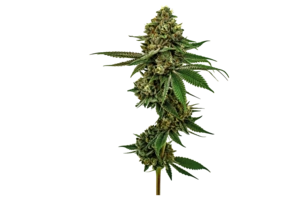
A hemp cultivation license is the legal authorization a grower needs to produce hemp in the United States.
The 2018 Farm Bill removed hemp from the federal definition of marijuana and defined it, under 7 U.S.C. § 1639o, as Cannabis sativa L. with no more than 0.3% delta-9 THC on a dry-weight basis. Federal regulations attach that protection to licensing: 7 CFR § 990.21 requires every producer to hold a valid license before growing hemp.
State departments of agriculture, tribal governments, or the USDA issue these licenses, depending on where the farm operates. Individuals, partnerships, and businesses all need one.
The license allows the holder to plant, grow, and harvest hemp on the specific fields, greenhouses, or indoor sites listed in the application.
Licensed growers may produce hemp for:
fiber
grain
seed
cannabinoid production
hemp research.
A USDA-issued license stays valid through December 31 of the third year after issuance. Some states, like New York, also issue 3-year licenses, while others, like Florida, issue annual licenses.
Do I Need a State Hemp License or a USDA License?
The answer depends on where the farm is located. Most growers need a state hemp license.
According to the USDA's list of approved hemp plans, 38 states run their own USDA-approved programs, so growers in those states apply through the state department of agriculture.
Florida is one example. In Florida, the Department of Agriculture and Consumer Services (FDACS) issues hemp cultivation licenses under section 581.217, Florida Statutes. Each license expires 12 months after issuance.
Georgia follows a similar model. In Georgia, the Department of Agriculture issues hemp grower licenses under the Georgia Hemp Farming Act. Each license covers one calendar year and costs $50 per acre, with a maximum of $5,000.
A USDA license is required only in states where no approved state or tribal plan exists. As of the USDA's February 2026 update, growers in these 12 states must apply to the USDA:
Hawaii
Iowa
Kansas
Mississippi
Missouri
Nebraska
New Hampshire
North Carolina
Ohio
Utah
Vermont
Wisconsin
Growers on tribal land apply through their tribe's approved plan. A handful of tribes also use the USDA program.
2. Gather documents. Applications require business details and GPS coordinates for every field, greenhouse, or indoor site. Each key participant must also submit a criminal history report; USDA rules require one, and states like Florida require a full set of fingerprints.
3. Meet state-specific requirements. Requirements differ from place to place. Georgia requires applicants to be qualified agricultural producers who name a contracted processor, unless they hold a processor permit themselves. Texas requires a separate permit for each field planted. Growers must check their state applications for specific details.
4. Submit and pay fees. Costs vary widely by state and can include application fees, annual registration fees, and per-acre charges. Some examples:
USDA states: no license fee, plus about $18 for the FBI background check
Allow time for review. Texas gives itself 60 days to issue a license, and Florida must flag application errors within 30 days. Background checks can add several weeks.
5. Report acreage to the Farm Service Agency. Licensed growers report planted acreage, site locations, and their license number to the USDA Farm Service Agency.
Hemp Growing Permit vs. Hemp Growing License: What's the Difference?
A hemp growing permit and a hemp growing license usually mean the same thing: state approval to cultivate hemp. The terms vary by state. Colorado calls it a "registration." Texas issues both: a license to participate in the program, plus a separate permit for each field planted. Georgia uses "permit" for processors, which is a separate authorization from its hemp grower license.
Is THC Testing Required With a Hemp License?
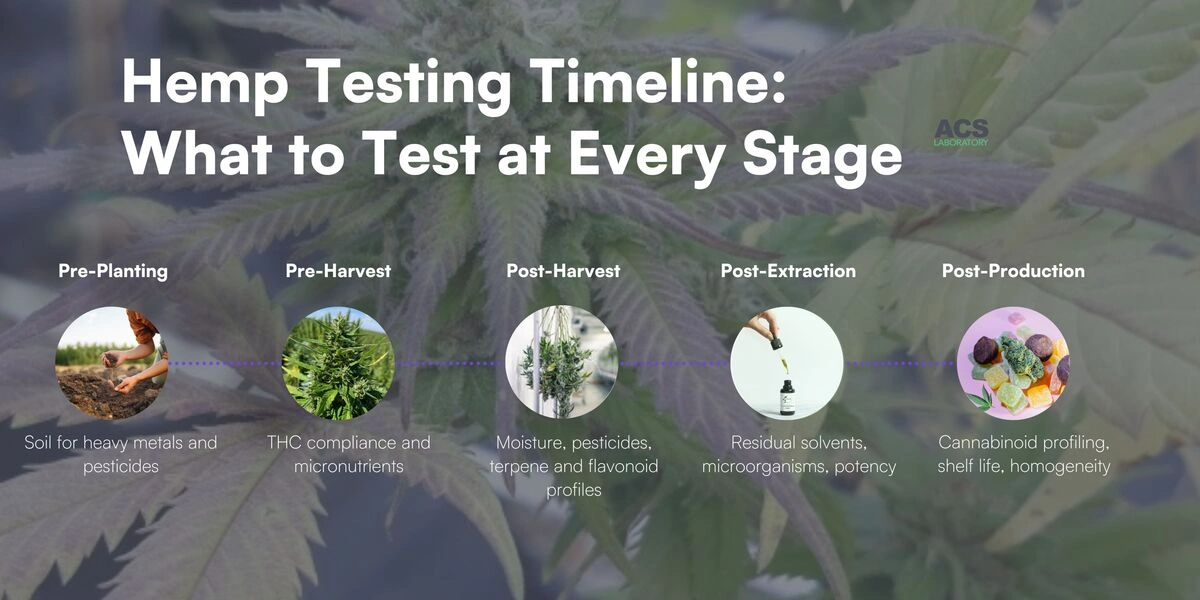
Yes, every hemp license requires growers to pass a THC compliance test on each lot before harvest. Under 7 CFR § 990.24, an authorized sampling agent collects samples within 30 days of the planned harvest. A DEA-registered laboratory then tests them for total THC, including the THCA that converts to delta-9 THC when heated.
The stakes are high. Crops that test above the limit must be remediated or destroyed under 7 CFR § 990.27. A result above 1.0% total THC counts as a negligent violation, and three violations in five years cost a grower their license for five years. Growers who line up a testing lab before planting avoid last-minute delays at harvest.
Contact ACS Laboratory for compliant pre-harvest hemp testing in Florida.
From Licensed Crop to Compliant Product
A pre-harvest THC test clears the crop, but finished hemp products face separate state rules. ACS Laboratory is DEA-registered and ISO/IEC 17025:2017-accredited, and it handles finished-product testing for hemp nationwide.
For brands selling in Georgia, Texas, and Florida, ACS now offers a three-state Hemp Compliance Panel. It tests each product against the strictest requirements of all three states on a single panel.
How much does a hemp cultivation license cost? Costs range from free to several thousand dollars, depending on the state. The USDA charges no license fee beyond the FBI background check, while Georgia charges $50 per acre, up to $5,000.
Can someone get a hemp license with a criminal record? Yes, unless the record includes a controlled-substance felony within the past 10 years. Under 7 U.S.C. § 1639p(e)(3)(B), that bar applies to every state, tribal, and USDA hemp program. States can also add stricter requirements of their own.
Does growing hemp for personal use require a hemp growing permit? Yes. Federal law has no personal-use or small-plot exemption, so growers in every state need a license or permit regardless of acreage. Under 7 U.S.C. § 1639p, growing without one violates a state plan, and 7 CFR § 990.21 imposes the same requirement in USDA-licensed states.
How often does a hemp growing license need to be renewed? Most state hemp licenses must be renewed every year, including in Florida, Georgia, and Texas. USDA licenses last longer and stay valid through December 31 of the third year after issuance.
Will the 2026 federal hemp redefinition affect hemp licenses? The new definition under Public Law 119-37 changes little for licensed growers in any state, because pre-harvest testing already measures total THC. Its main effect falls on finished hemp-derived products.
Need a Test or Have a Question
Call Us at 813-670-9197 or Click to send us a message.













.png)
.jpg)

.png)
.png)
.png)
.png)

