Mixing Problem: Most testing failures occur because cannabis oil naturally separates from water, causing the THC to clump or stick to the container instead of staying evenly blended for an accurate test.
Packaging Issues: Packaging materials, specifically can liners, can physically "steal" potency from the liquid before it reaches the consumer.
Equipment Failures: Standard lab filters and extraction methods used for flower often fail when applied to complex liquid matrices.
The Solution: Beverage-specific testing methods, advanced LC-MS/MS analysis, and sampling multiple cans or bottles help laboratories generate more accurate THC potency results.
The cannabis industry is riding a liquid wave. From hemp-derived Delta-9 seltzers in mainstream liquor stores to high-potency THC elixirs in dispensaries, infused beverages are one of the fastest-growing categories in the market. However, behind the trend lies a complex scientific reality: beverages are arguably the most difficult cannabis products to test accurately.
For manufacturers and retailers, an inaccurate COA (Certificate of Analysis) isn’t just a clerical error—it is a precursor to product recalls, legal liability, and brand erosion. At ACS Laboratory, we master the complex chemistry of infused liquids to solve beverage testing challenges and ensure industry-wide transparency.
What Are Infused Beverages?
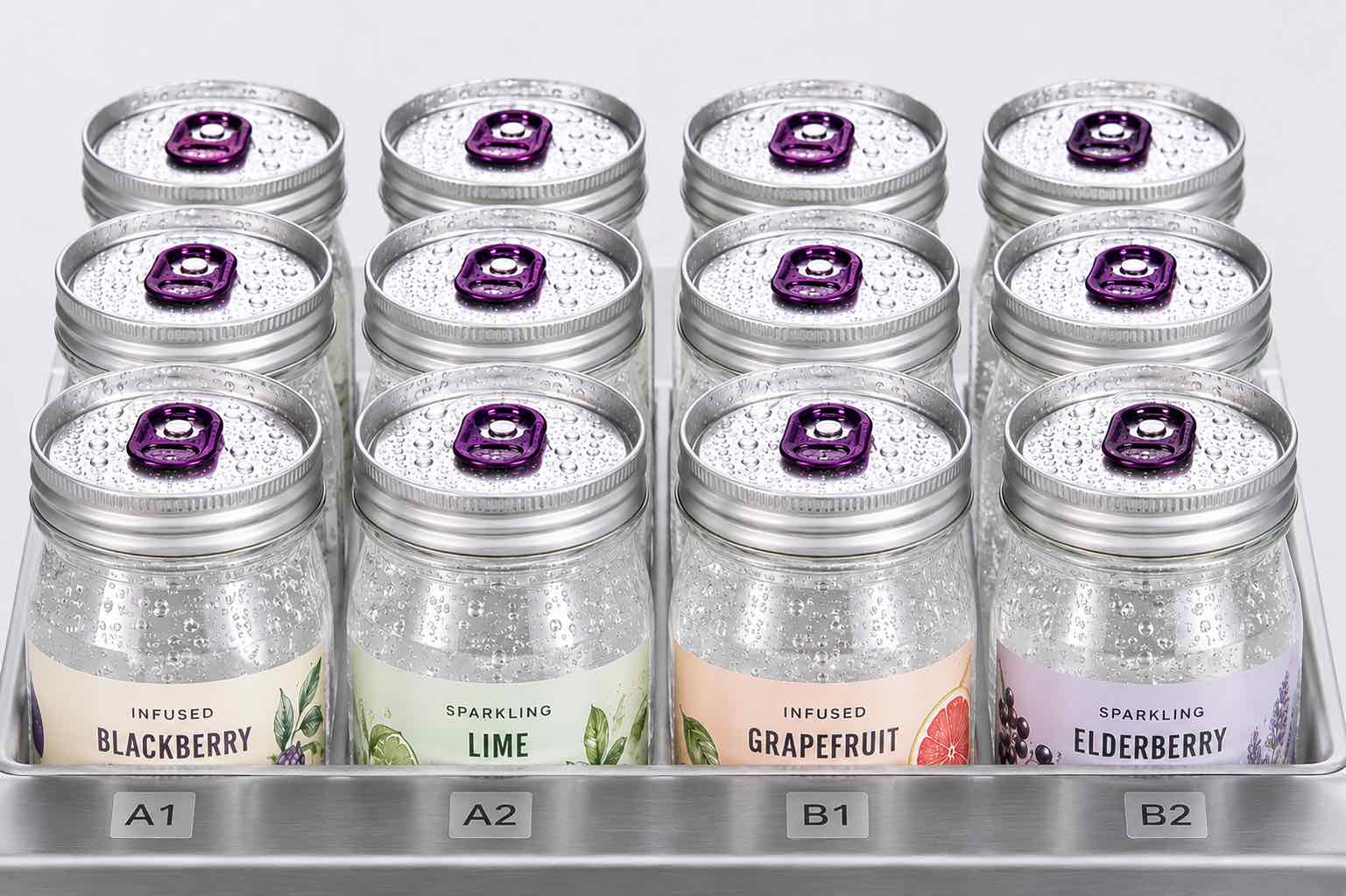
Infused beverages are drinkable products containing cannabinoids like THC or CBD that have been integrated into a liquid base. Blending THC with liquids is no easy task because cannabis oil is naturally hydrophobic (water-fearing),
Manufacturers solve the solubility problem with advanced emulsification technology that breaks cannabinoids into tiny droplets that can be suspended in water. The resulting blend, known as a nanoemulsion, provides a consistent psychoactive experience.
Nanonoemulsions also have a rapid onset—often within 15 minutes. And the market can’t get enough.
How Nanoemulsions Work: High-shear mixing or ultrasonication breaks cannabis oil into droplets less than 100 nanometers wide, keeping them suspended in water.
Hemp-Derived Growth: The rise of hemp-infused drinks in traditional retail has moved cannabis beverages from niche dispensary items to mainstream consumer goods.
Complex Formulations: Modern drinks range from simple flavored seltzers to complex "mocktails" that contain sugars, acids, and juices, which affect chemical stability.
Why Are THC Drinks So Hard to Test Accurately?
Successfully testing a cannabis beverage’s potency is challenging because it requires expert understanding of fluid dynamics and molecular attraction.
Nanoemulsions create a temporary truce between oil and water, but they do not change the fundamental laws of chemistry. Cannabinoids remain "hydrophobic" (water-fearing) at their core. They constantly seek to escape water and bond to a more compatible surface.
Factors like temperature shifts, high acidity, or even the passage of time can destabilize a nanoemulsion. These conditions cause THC to migrate, making it difficult for the lab to capture a truly representative sample of the drink’s potency.
1. Inhomogeneity and Separation
If a drink is not perfectly stable, the cannabinoids will not be evenly distributed throughout the container. This leads to "hot spots" where one sip might contain 20mg of THC while the rest of the bottle contains almost none.
Emulsion Breakdown: Over time, the surfactants that hold the oil in suspension can fail, causing the cannabinoids to "cream" to the top or settle to the bottom.
Settling: Without rigorous homogenization during sampling, a lab technician might pull a sample from the "weak" part of the liquid, resulting in a false low-potency reading.
Pulp Interference: Drinks with natural fruit sediments or pulp act like magnets for cannabis oils. The emulsion sticks to the solids, causing wild swings in test results if the pulp isn't processed correctly.
2. "Scalping" (Packaging Interaction)
One of the most frustrating challenges for infused beverage manufacturers is "scalping," a phenomenon in which the potency literally vanishes while sitting on the shelf. This isn't a lab error; it’s a chemical reaction between the drink and its container.
Aluminum Cans: Most cans have a hydrophobic polymer liner to prevent the liquid from corroding the metal. This creates a problem because THC is also hydrophobic and is chemically attracted to the liner. As a result, the cannabinoids may migrate out of the beverage and adhere to the container's sides, effectively "stealing" the drink's potency.
Plastic (PET) Bottles: Similar to can liners, PET plastic can attract and "absorb" cannabinoids, significantly reducing the liquid's potency over time.
Loss of Potency: In some cases, up to 50% of the THC can be lost to the packaging within just a few weeks of production.
Some labs attempt to use the same "standard operating procedures" (SOPs) for beverages that they use for cannabis flower or gummies. This is a recipe for disaster, as the liquid matrix requires a much more delicate touch.
Extraction Difficulty: Pulling THC from a liquid containing sugars, preservatives, and emulsifiers is significantly harder than extracting it from dried plant material.
Filter Trapping: Standard lab filters (such as PTFE membranes) are designed to remove impurities. However, they often capture nano-emulsion particles, inadvertently stripping THC from the sample before it can be measured.
Sensitivity Requirements: Beverages are often low-dose (e.g., 5mg per 12oz), so labs need ultra-high-sensitivity THC testing instruments like LC-MS (Liquid Chromatography-Mass Spectrometry) to accurately detect minute concentrations.
4. Chemical Degradation
Packaging and storage choices can drastically affect beverage potency because cannabinoids are highly sensitive to their environment. Clear glass bottles or fluctuating storage temperatures can trigger rapid degradation of these compounds. Oxygen exposure and acidity can also lead to chemical breakdown before the product even leaves the shelf.
Oxidation: If oxygen enters the container, THC can convert to CBN, which is less potent and causes drowsiness, altering the intended effect of the product.
Acidity (pH) Issues: Highly acidic drinks, such as lemonade, can destabilize emulsion surfactants, causing THC to "crash out" of the liquid.
5. Lab-to-Lab Variability
The lack of a national standard for beverage testing means that two different labs might give different results for the same batch. This variability creates a "guessing game" for manufacturers trying to stay compliant.
Methodology Gaps: Different labs use different solvents and preparation techniques, leading to inconsistent data.
The 10% Margin: A ±10% variance is common in analytical chemistry. However, in the world of high-stakes cannabis regulations, that 10% can be the difference between a "pass" and a total product recall.
Risks for the Industry
The consequences of inaccurate beverage testing ripple through the entire supply chain. For a cannabis brand, a single bad batch or a failed audit can be a devastating event.
Massive Financial Risks: Testing inconsistencies leads to recalls. In Michigan, a single lab audit once triggered the recall of $229 million worth of products.
Regulatory & Legal Barriers: When testing is unreliable, regulators often impose bans or strict limits. Inaccurate labels also make brands easy targets for class-action lawsuits regarding consumer fraud.
Operational Inefficiencies: If brands don't catch instability early, they waste months formulating and marketing on a product that loses potency by the time it reaches the customer.
"Lab Shopping": Pressure to hit specific THC concentration numbers encourages "lab shopping," where brands seek labs with "friendly" (inflated) results. This practice undermines the integrity of the entire beverage category.
Risks for Consumers
Consumers bear the ultimate risk when beverage labels are inaccurate. A mismatch between the THC quantity on the label and the actual contents turns the cannabis experience into a gamble.
Accidental Overconsumption: If a beverage is secretly more potent than the 10mg label suggests, a consumer may experience extreme anxiety or physical discomfort.
Health & Safety Hazards: Beverages are susceptible to microbial growth (mold, yeast, and bacteria). Inadequate testing can leave consumers—especially immunocompromised patients—vulnerable to illness.
Erosion of Trust: If a consumer buys a "10mg" THC drink and feels nothing because the THC stuck to the can, they likely won't buy that brand—or any cannabis beverage—again.
Economic Deception: Consumers pay a premium for high-potency products. Inflated labels mean they are paying for a "premium" experience they aren't actually receiving.
How ACS Laboratory Ensures Accuracy in Every Drop
To solve the "beverage problem," brands need a specialized scientific partner. ACS Laboratory has developed a proprietary approach to soluble beverage testing that accounts for the unique physics of liquids.
At ACS Laboratory, we utilize advanced LC-MS/MS technology to deliver the highest sensitivity and precision. Unlike standard HPLC methods, our process bypasses "matrix interference," preventing sugars and emulsifiers from clouding the results.
Matrix-Specific Validations: We don't use a "one size fits all" method. We tailor our extraction process to the specific beverage type (seltzer, tea, soda, etc.).
Stability Testing: We help brands understand the shelf-life of their emulsions, identifying if (and when) "scalping" or degradation occurs.
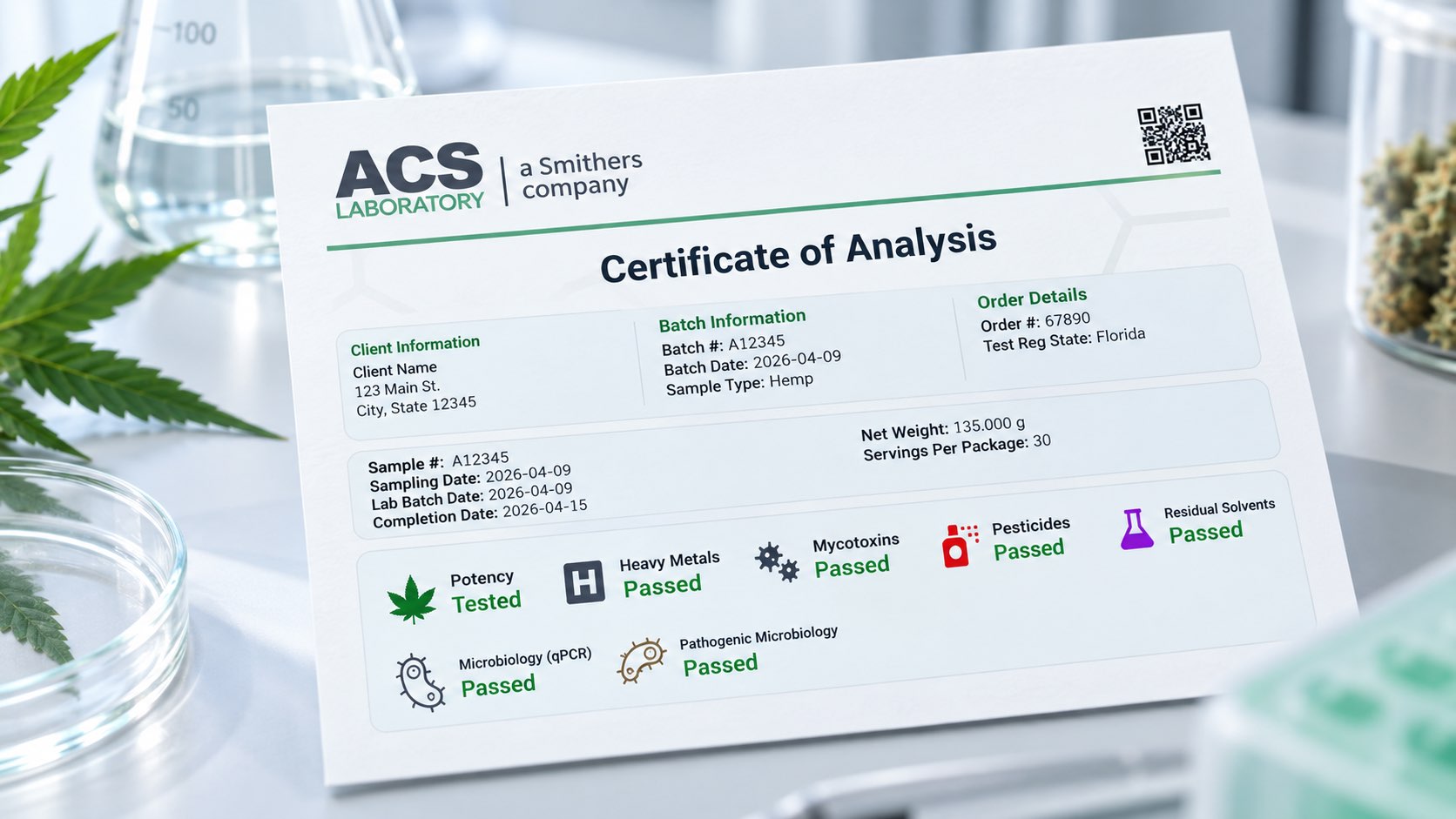
Comprehensive Screening: Beyond potency, we provide rigorous testing for heavy metals, pesticides, and microbes to ensure every sip is safe.
Proven Accuracy: As the most trusted hemp and cannabis lab in the country, we deliver the reliable data brands need to scale with confidence.
Ready to ensure your beverage brand stands the test of time? Contact ACS Laboratory today to learn more about our industry-leading protocols for testing infused beverages.
Need a Test or Have a Question
Call Us at 813-670-9197 or Click to send us a message.














.png)

.png)
.png)
.png)
.png)