The Conversion Metric: Raw Amanita muscaria contains high levels of ibotenic acid, which causes stomach cramps and twitching. Proper preparation converts ibotenic acid into muscimol, responsible for the trippy effects consumers actually want.
Drying Isn't Enough: Simply dehydrating or boiling the mushrooms at home rarely converts 100% of the ibotenic acid. Lab testing is the only way to prove a product is truly safe.
Spotting "Spiked" Products: Third-party mushroom testing ensures Amanita products (like gummies and vapes) are pure and don't secretly contain illegal psilocybin or dangerous synthetic drugs.
The Sponge Effect: Wild mushrooms soak up everything in the soil. A good Amanita panel checks for heavy metals (like lead and cadmium) and nasty microbes before these products hit shelves.
At a Glance Summary: What Does Safe Prep & Testing Entail?
Preparing Amanita muscaria safely requires a chemical process called decarboxylation, which uses heat and acidic liquids to convert the mushroom’s naturally harsh toxin, ibotenic acid, into its relaxing, active compound, muscimol. Because wild mushrooms vary wildly in strength, traditional kitchen preparation is highly unpredictable.
For Amanita brands and consumers, third-party laboratory testing is the only definitive way to measure this conversion, guarantee accurate dosing, and ensure the final product is free of heavy metals and illegal psychedelics.
Nationwide Amanita muscaria lab testing with ACS Laboratory protects both sides of the market by replacing guesswork with hard, scientific data.
The Chemistry of Amanita Prep (In Plain English)
Amanita muscaria preparation methods rely on heat, dehydration, or extraction to alter the mushroom’s active chemical composition for safe and effective use.
Raw Amanita muscaria contains two primary active compounds, ibotenic acid and muscimol. It also contains muscarine at much lower levels. (source)
Ibotenic acid is a neurotoxin (with some therapeutic properties) that causes severe nausea, stomach cramps, and involuntary muscle twitching at high levels. (source) It occurs naturally at much higher concentrations than muscimol.
Muscimol is the compound responsible for the clean, deeply relaxing, and dream-like psychoactive experiences that consumers seek.
The Amanita preparation process aims to reduce ibotenic acid levels to near-zero trace and increase muscimol to a safe, active range. This conversion process occurs through decarboxylation (removal of a carbon atom). In traditional prep, hobbyists generally attempt decarboxylation in one of two ways: (source)
1. The Drying Method
Many foraging enthusiasts place raw, sliced mushroom caps into a food dehydrator until crisp. Time, airflow, and moderate heat remove water and initiate the chemical shift. However, it is a dry process that rarely converts more than 30% of the ibotenic acid, leaving the mushroom highly toxic.
2. The Boiling Method
Many kitchen preparation methods continue this conversion by simmering the dried mushrooms in a highly acidic liquid environment, such as water adjusted with lemon juice or citric acid. Applying heat in this low-pH environment strips a carbon atom from the ibotenic acid molecule, converting it directly into muscimol.
The Safety Issue
The fundamental problem is that both boiling and drying A. muscaria are notoriously unpredictable and do not guarantee a safe ratio of ibotenic acid and muscimol.
Professional manufacturers typically avoid these issues by utilizing enclosed, temperature-controlled industrial extraction reactors to ensure uniform batches. However, even automated industrial setups require laboratory validation via lab testing to confirm that the conversion process has fully completed before the extract is infused into consumer products.
Why Amanita Brands & Consumers Can't Skip the Lab (The Risks of Guesswork)
Unpredictable preparation methods, the natural volatility of Amanita muscaria, safety and liability concerns, and regulatory requirements make lab testing an absolute necessity for anyone who manufactures or purchases it.
Preparation issues
Both household kitchens and commercial manufacturing facilities face major processing hurdles that compromise product safety.
Home preppers lack precise control over dehydration temperatures, simmer times, and acidity levels, which makes drying and extraction more like chemical guesswork. Meanwhile, commercial manufacturers may struggle with uneven heat distribution in large extraction vats, creating "cold spots" where toxins fail to break down.
Without laboratory instruments, neither group can verify whether the conversion process succeeded or whether a hazardous batch of extract was produced.
Natural Mushroom Variability
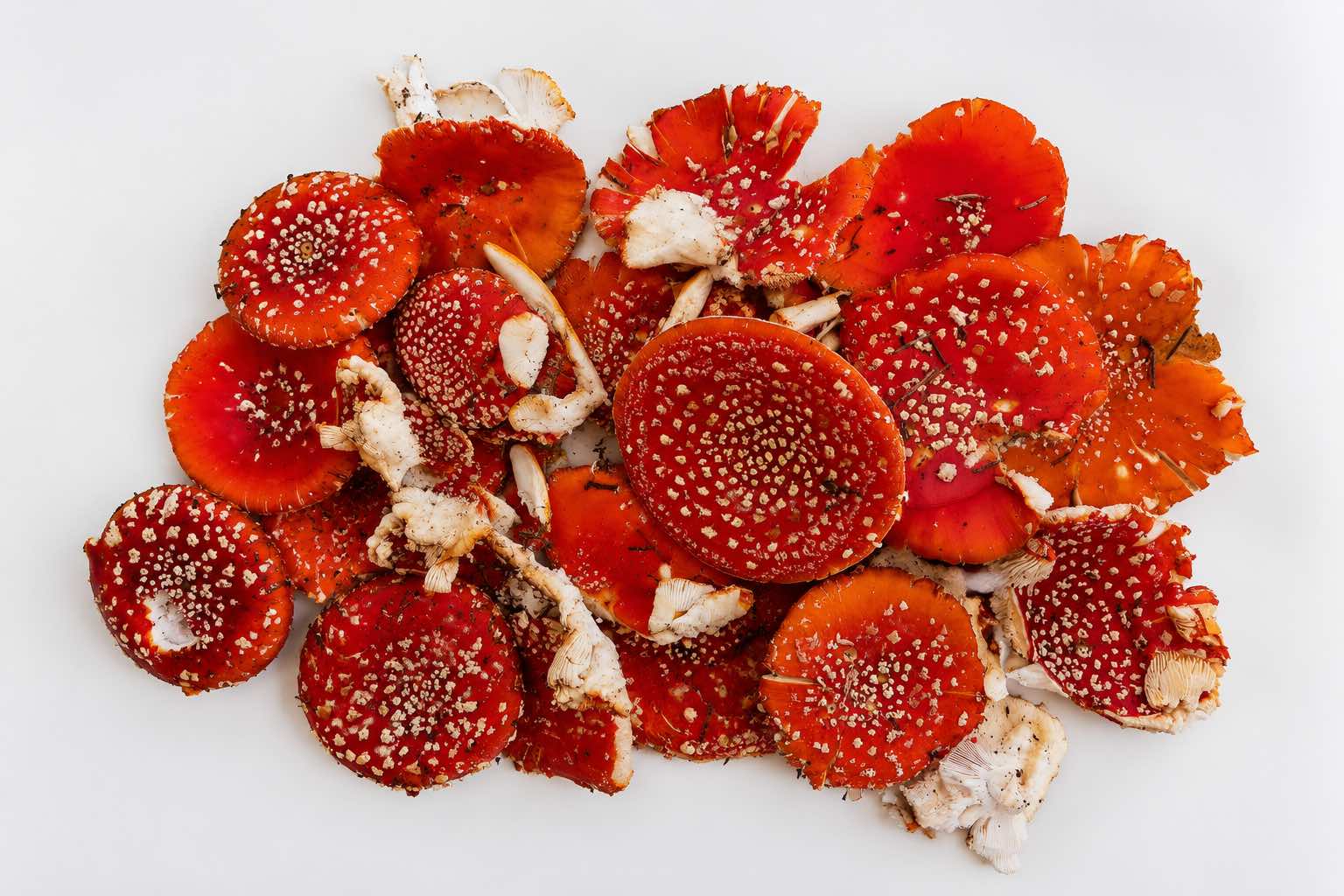
Wild mushrooms do not grow with uniform ingredient labels attached to their stems. Two identical-looking red-and-white caps growing just three feet apart under the same tree can have different chemical profiles.
Factors such as local weather, soil nutrient composition, harvest timing, and even the ratio of the mushroom's cap to its stem can alter the baseline concentrations of ibotenic acid and muscimol. (source)
Safety & Liability Risks
Skipping the Amanita lab testing process introduces significant liability risks for brands and physical dangers to consumers. Consuming an improperly prepared batch of Amanita with high levels of ibotenic acid can trigger an unpleasant or dangerous physiological reaction.
Excessive ibotenic acid/muscimol from Amanita muscaria most often causes a temporary but intense syndrome of confusion, hallucinations, agitation, and alternating drowsiness with GI upset. However, case series and reports show that large or unpredictable doses can lead to seizures, deep coma, respiratory failure, and cardiac arrest. (source)
For manufacturers, a single adverse event can trigger devastating lawsuits, product recalls, and permanent brand damage.
Business Requirements
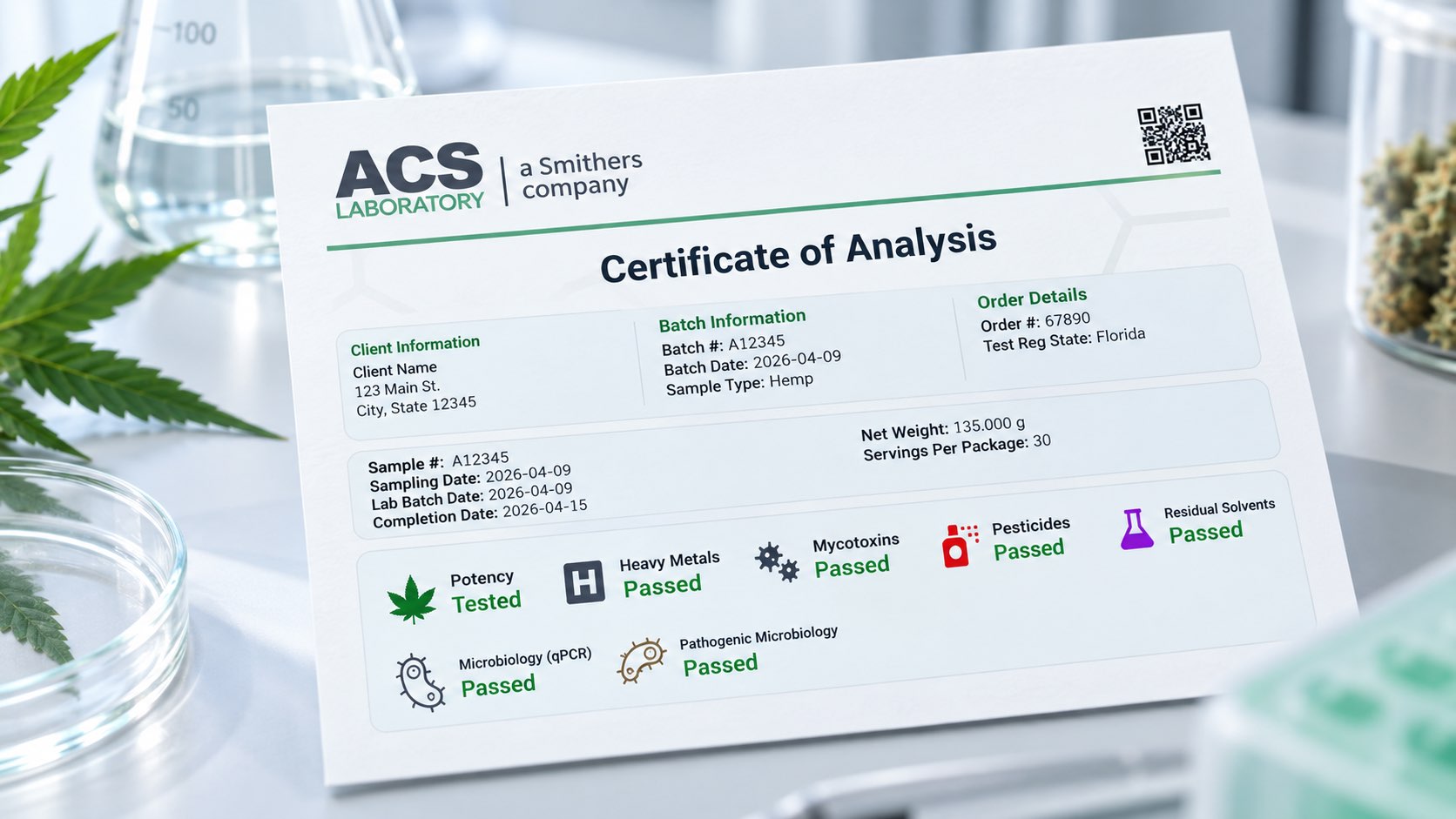
Additionally, banks, payment processors, and mainstream distributors typically require valid test result documentation before onboarding mushroom brands. A valid Certificate of Analysis (COA) from an accredited laboratory serves as both a safety verification tool and a business safeguard, demonstrating that the product underwent professional potency and contaminant testing.
How ACS Laboratory Tests Amanita
Potency Testing via LC-MS
Liquid Chromatography-Mass Spectrometry (LC-MS) is the standard technology mushroom testing labs, like ACS Laboratory, use to precisely identify and quantify Amanita’s active compounds.
How does it work?
Chemists dissolve the Amanita sample and inject it into an instrument that separates molecules by size, mass, and chemical properties. The machine measures the exact milligram count of muscimol, ibotenic acid, and muscarine per serving. This precise breakdown allows manufacturers to tweak their recipes and guarantees that consumers get the exact dose listed on the box.
The Compliance Check (No-Psilocybin Screening)
Mushroom testing with ACS Laboratory also focuses heavily on verifying Amanita product compliance across state and federal rules.
Amanita muscaria is not a controlled substance in the United States because it does not contain psilocybin or psilocin—the restricted compounds found in traditional "magic mushrooms." However, the market faces an issue with formulas that contain illicit psychedelic or synthetic chemicals to mimic a trip. (source) Additionally, brands cannot legally market Amanita tinctures for human consumption following a recent FDA ban. Those who do get removed from shelves.
ACS Laboratory runs an intensive Amanita compliance screening panel for brands, in accordance with FDA guidance, that scans for illegal tryptamines. This test certifies that an Amanita product is 100% fee from illicit substances, protecting brands and consumers from unexpected consequences.
The Contaminant Screen
ACS Laboratory also conducts Amanita safety tests for environmental contaminants, as mushrooms are nature's ultimate bioaccumulators. Fungi act like micro-sponges, absorbing everything present in the surrounding soil and air. (source) A comprehensive laboratory screening analyzes products for:
Heavy Metals: Lead, cadmium, arsenic, and mercury.
Microbials: Pathogens such as E. coli, Salmonella, and toxic molds.
Residual Solvents: Hazardous byproducts of the manufacturing process, such as butane, ethanol, or isopropyl alcohol.
.
How to Read an Amanita COA (Consumer & Brand Checklist)
Reading a Certificate of Analysis (aka lab test results) involves examining a few specific markers to instantly confirm a product's purity and safety.
A legitimate lab report should never be difficult to interpret, and it should always be accessible via a transparent QR code printed directly on the product packaging.
When reviewing an Amanita COA, brands and consumers should utilize the following checklist:
The Muscimol-to-Ibotenic Acid Ratio: The report should display a high concentration of muscimol alongside minimal or "ND" (Not Detected) levels of ibotenic acid to guarantee a comfortable experience.
The Contaminant Status: Every safety category—including heavy metals, microbials, mycotoxins, and residual solvents—must clearly display a green "PASS" status rather than a "FAIL."
Lab Credibility: The document must feature the official stamps, signatures, and licensing credentials of an ISO/IEC accredited, third-party facility to ensure the data has not been falsified.
Contact ACS Laboratory today to verify your Amanita products with advanced potency and contaminant testing to help ensure consistent muscimol levels, reduced ibotenic acid content, and safer consumer experiences.
Frequently Asked Questions (FAQs)
Can you just dry Amanita muscaria to make it safe to eat?
Drying raw mushrooms in a food dehydrator removes water weight and converts some ibotenic acid into muscimol, but it does not complete the process. Laboratory testing consistently shows that dried caps retain high levels of unconverted toxins, indicating a secondary liquid-and-heat brewing process is required to make the material safe.
Is Amanita muscaria legal?
Amanita muscaria is unscheduled in the United States but regulated by the FDA. The FDA issued a warning to food manufacturers in 2024, stating that Amanita muscaria and three of its compounds (muscimol, ibotenic acid, and muscarine) are not authorized for use in food because they do not meet federal safety standards. Those who produce Amanita for research purposes only may be in compliance with this guidance.
Why do some store-bought Amanita products make people sick?
Store-bought products often cause adverse reactions because manufacturers failed to test their ingredients, leading to unsafe levels of ibotenic acids or unreported synthetic psychedelic compounds. Looking for a verified COA confirming the ingredients and the absence of Schedule I substances before buying helps prevent consumers from ingesting unsafe formulas.
What's the difference between Amanita muscaria and Amanita pantherina?
Both species contain the same active compounds, but Amanita pantherina (the brown-capped cousin) produces those compounds at much higher baseline levels. Testing instruments reveal that Pantherina can be two to five times more potent than standard Muscaria, meaning strict laboratory quantification is vital to ensure these strong mushrooms are never mixed up during product manufacturing.
Need a Test or Have a Question
Call Us at 813-670-9197 or Click to send us a message.












.png)
.png)
.png)
.png)
.png)