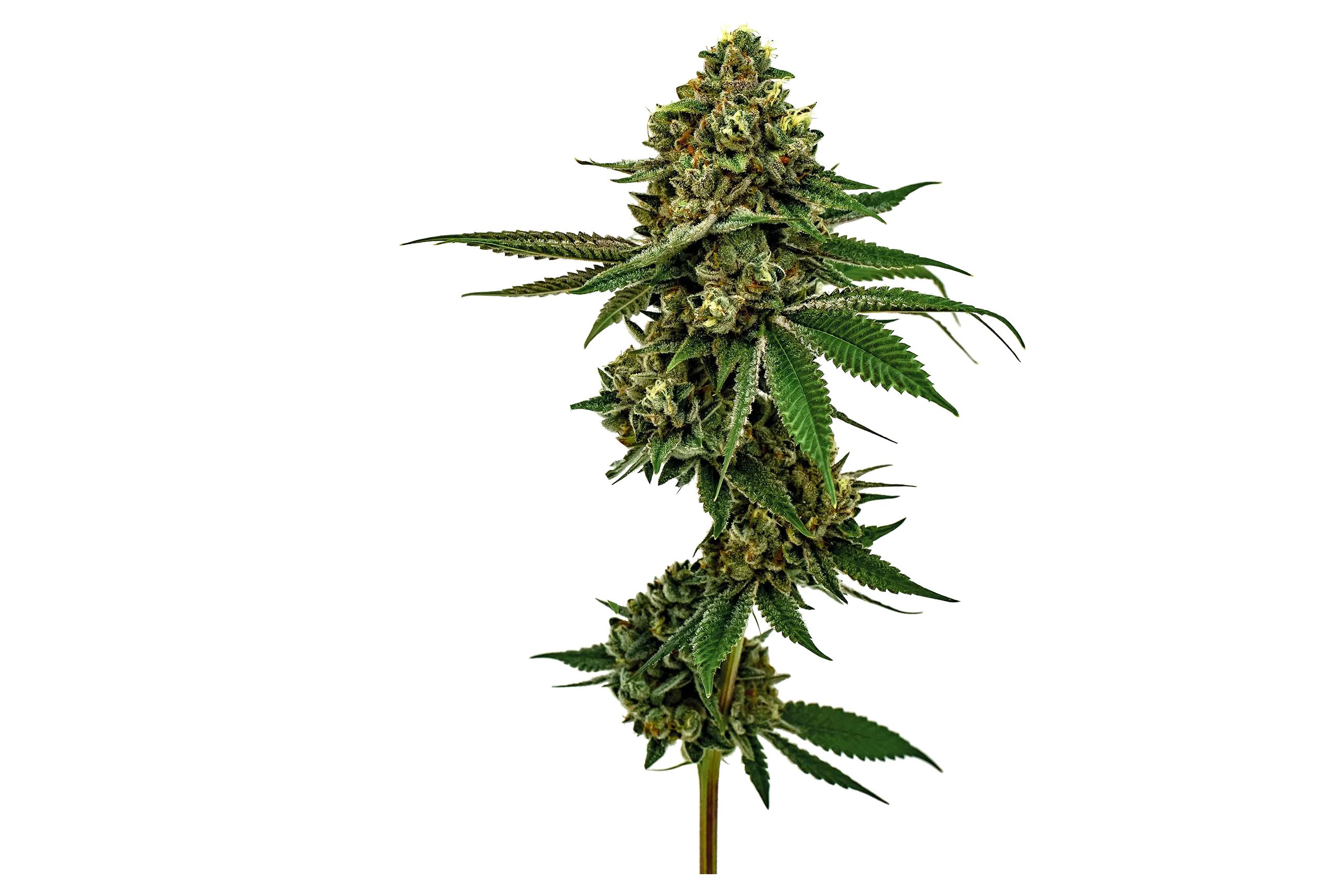
For cannabis brands, terpene testing has evolved from a niche, "nice-to-have" lab report into a foundational business strategy. THC percentage was once the only metric consumers cared about, but the market has matured significantly.
Data-backed terpene profiling matters in 2026 because it directly impacts product development, marketing, and consumer trust.
What Are Terpenes and Why Do They Matter?
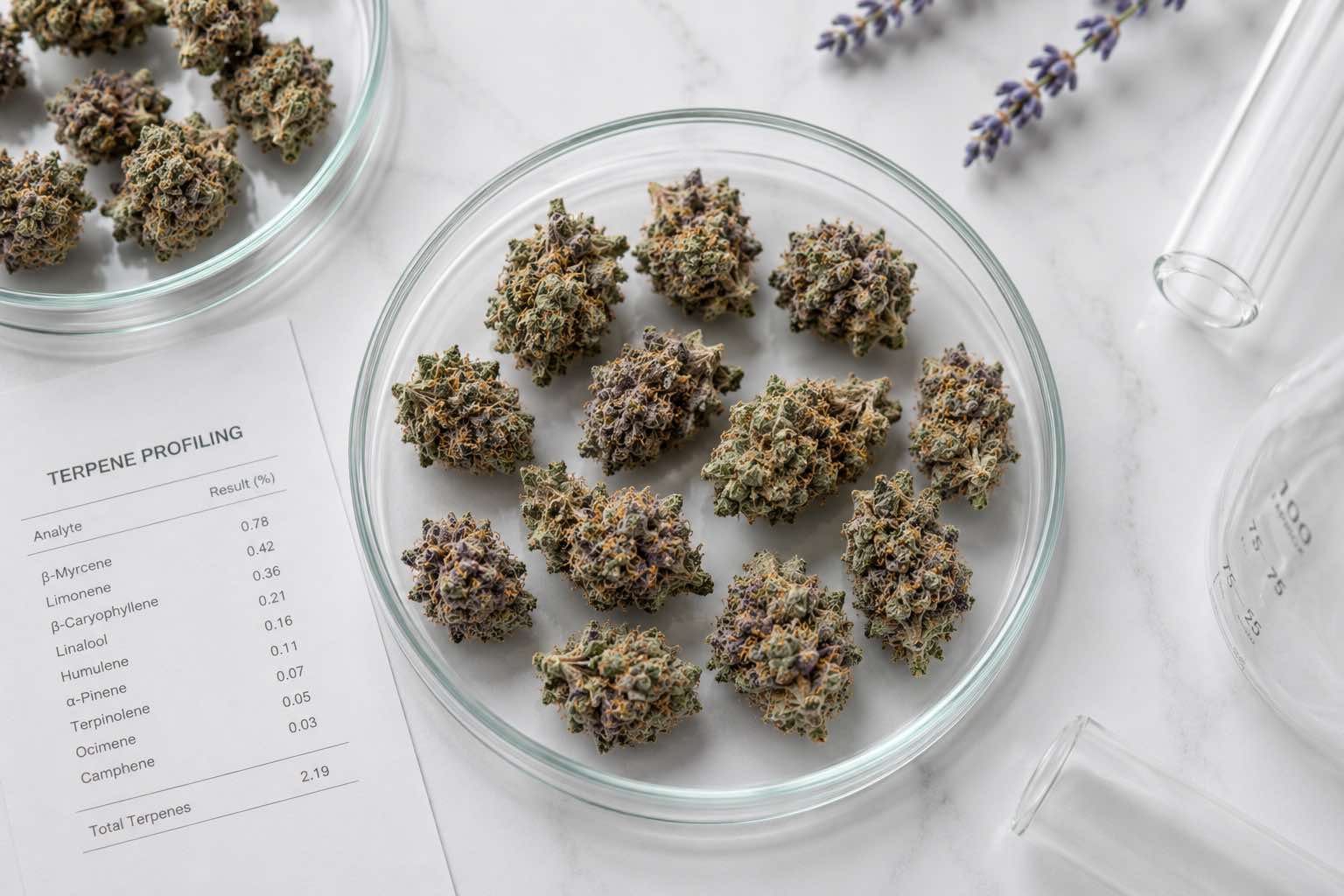
Terpenes are natural chemical compounds and essential oils produced in the same trichomes where THC develops. In cannabis, over 200 different terpenes have been identified. They exist in relatively modest concentrations of around 2%, compared to 10-30% for major cannabinoids. However, terpenes produce research-backed effects.
These volatile molecules are responsible for the diverse aromas found throughout the plant kingdom—from the pine scent of forests to the citrus fragrance of lemons.
Terpenes also significantly influence a strain's overall effects. Common terps, such as myrcene, limonene, and pinene, don't just create appealing aromas—they interact with cannabinoids and the body's endocannabinoid system to influence therapeutic outcomes.
This phenomenon, known as the entourage effect, suggests that cannabis compounds work synergistically, producing effects greater than the sum of their individual parts.
Terpene Profiling with ACS Laboratory
ACS Laboratory, a national hemp and cannabis testing lab, offers one of the most comprehensive terpene profiling panels available. The laboratory quantifies 38 individual terpenes, including many compounds that other laboratories do not routinely measure. This expanded panel captures both primary aroma drivers and secondary terpenes that influence synergy and stability.
ACS Laboratory supports terpene testing across nearly all product types, including flower, biomass, extracts, edibles, beverages, vapes, tinctures, topicals, and transdermal products. This flexibility allows brands to maintain terpene consistency across diverse formulations.
Advanced instrumentation supports this precision:
- Gas Chromatography with Mass Spectrometry identifies volatile compounds at trace levels
- Gas Chromatography with Flame Ionization Detection provides accurate quantification of these compounds
- These complementary methods account for the volatility and low concentration of terpenes
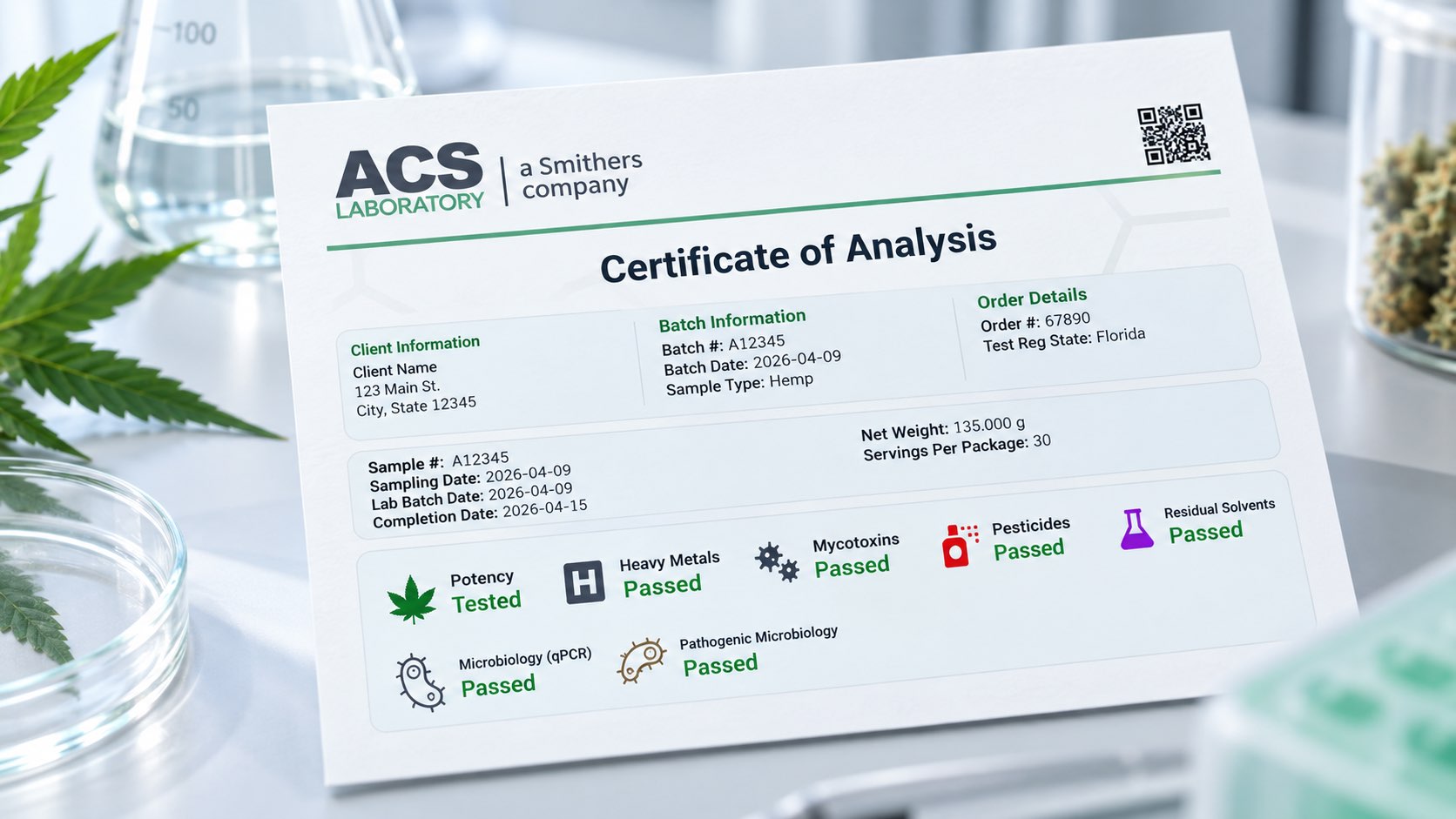
Each analysis generates a detailed certificate of analysis that documents terpene and cannabinoid concentrations. QR code access on product labels enhances transparency, enabling consumers to make informed decisions.
How Terps Support Consumer Choice and Product Development
Terpene testing enables consumers to make informed purchasing decisions tailored to their specific needs and preferences.
Different terpene profiles produce distinct effects:
- Myrcene and linalool tend to promote relaxation and sleep, making them ideal for evening use or as a stress-relief aid.
- Pinene and limonene often offer a more energizing, uplifting experience, making them suitable for daytime use.
For medical cannabis customers, terpene profiles become even more critical. Research indicates specific terpenes can provide therapeutic benefits:
- Beta-caryophyllene, for example, activates CB2 receptors involved in immune function and inflammation control
- Limonene demonstrates neuroprotective properties and may support mental health by boosting serotonin and dopamine levels.
- Linalool, the compound responsible for lavender's signature scent, is linked to anxiety relief through its aromatherapy effects.
Understanding terpenes’ therapeutic potential allows brands to develop purpose-driven products. Rather than relying on outdated "indica versus sativa" classifications, companies can formulate extracts, edibles, and concentrates enriched with specific terpenes to support desired effects—whether that's pain relief, improved focus, or better sleep.
How Terpenes Boost Quality and Marketability
Beyond therapeutic applications, terpene testing ensures products meet consumer expectations for aroma, flavor, and potency.
Cannabis connoisseurs seek strains with robust, complex terps that produce frosty trichomes and distinctive scents. Testing throughout the cultivation and production process—from pre-harvest to finished goods—enables brands to verify that their products consistently deliver high quality.
- Pre-harvest terpene testing enables cultivators to understand how environmental conditions affect terpene expression.
- Post-harvest testing confirms that the drying, curing, and extraction processes haven't degraded valuable terpenes, which are particularly important for maintaining the integrity of full-spectrum products.
Terpenes and The Future of Cannabis Innovation
Recent research validates the importance of terpene testing for the future of innovation.
Studies show that terpenes can activate cannabinoid (CB1) receptors at 10-50% of THC's potency. Additionally, when combined with THC, borneol, limonene, and sabinene create a synergistic amplification that boosts the overall CB1 activation significantly beyond what THC could do by itself.
This synergy suggests that a lower-THC product enriched with the right terpenes (such as borneol, limonene, or sabinene) can trigger a stronger cellular response than a high-THC product alone. Thus, brands could shift toward potency optimization rather than just maximizing THC mass, allowing consumers to get stronger therapeutic effects with less actual THC.
Ready to unlock your product's full potential?
Visit ACSLab.com to Learn More















.png)


.png)
.png)
.png)
.png)