You can submit kratom for third-party testing by preparing a representative sample, completing the order documentation, and shipping it to a national testing facility such as ACS Laboratory. The process starts with selecting the correct sample type and size based on your product format and testing panel, followed by submitting the order and chain-of-custody information through a secure client portal. You then ship the sample using standard carriers such as USPS, FedEx, or UPS for intake and analysis.
Understanding each sample submission step helps prevent kratom testing delays, protect sample integrity, and ensure accurate measurement of kratom’s key alkaloids and potential contaminants.
What Does the Kratom Sample Submission Process Look Like?
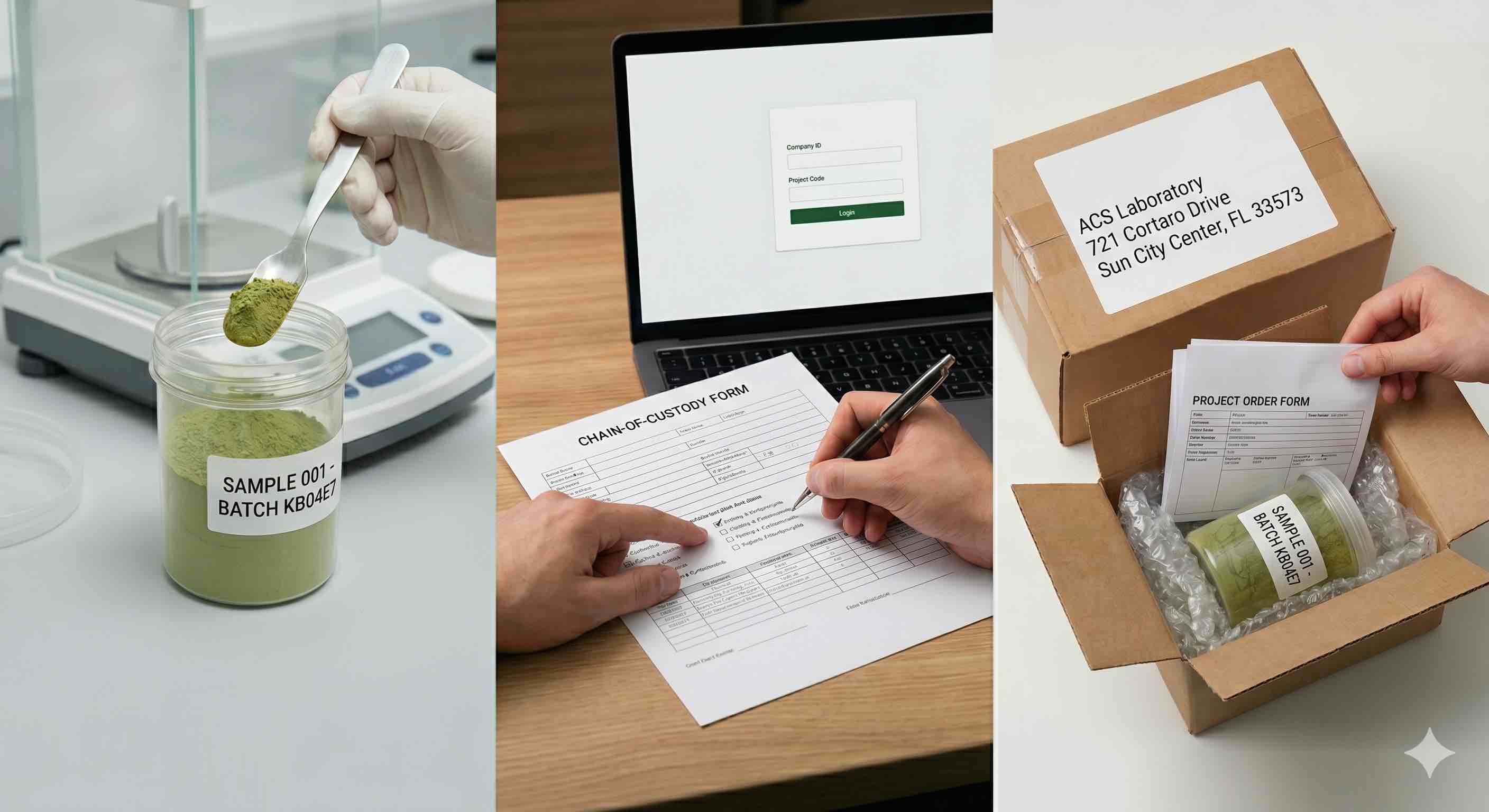
The kratom sample submission process follows three clear steps. Each step directly impacts how efficiently your products move through testing and how confidently you can bring them to market.
01. Prepare the sample
Pull material that reflects your full production batch, whether you’re working with bulk powder, encapsulated products, or concentrated extracts. Consistency matters here, especially for alkaloid distribution and contaminant screening across nationwide retail and e-commerce channels.
02. Complete the documentation
Submit your order and chain-of-custody (CoC) details through the secure client portal. Accurate documentation ensures your sample is tied to the correct product.
03. Ship or deliver the sample
Send your sample to ACS Laboratory using USPS, FedEx, or UPS. Secure packaging and clear labeling protect your product during transit. Always include the order confirmation in the package.
Each step builds on the next. Strong preparation and clear documentation help your kratom products move through testing with fewer disruptions, whether you’re supplying local retailers or scaling across multiple states.
What Kratom Samples Does ACS Test?
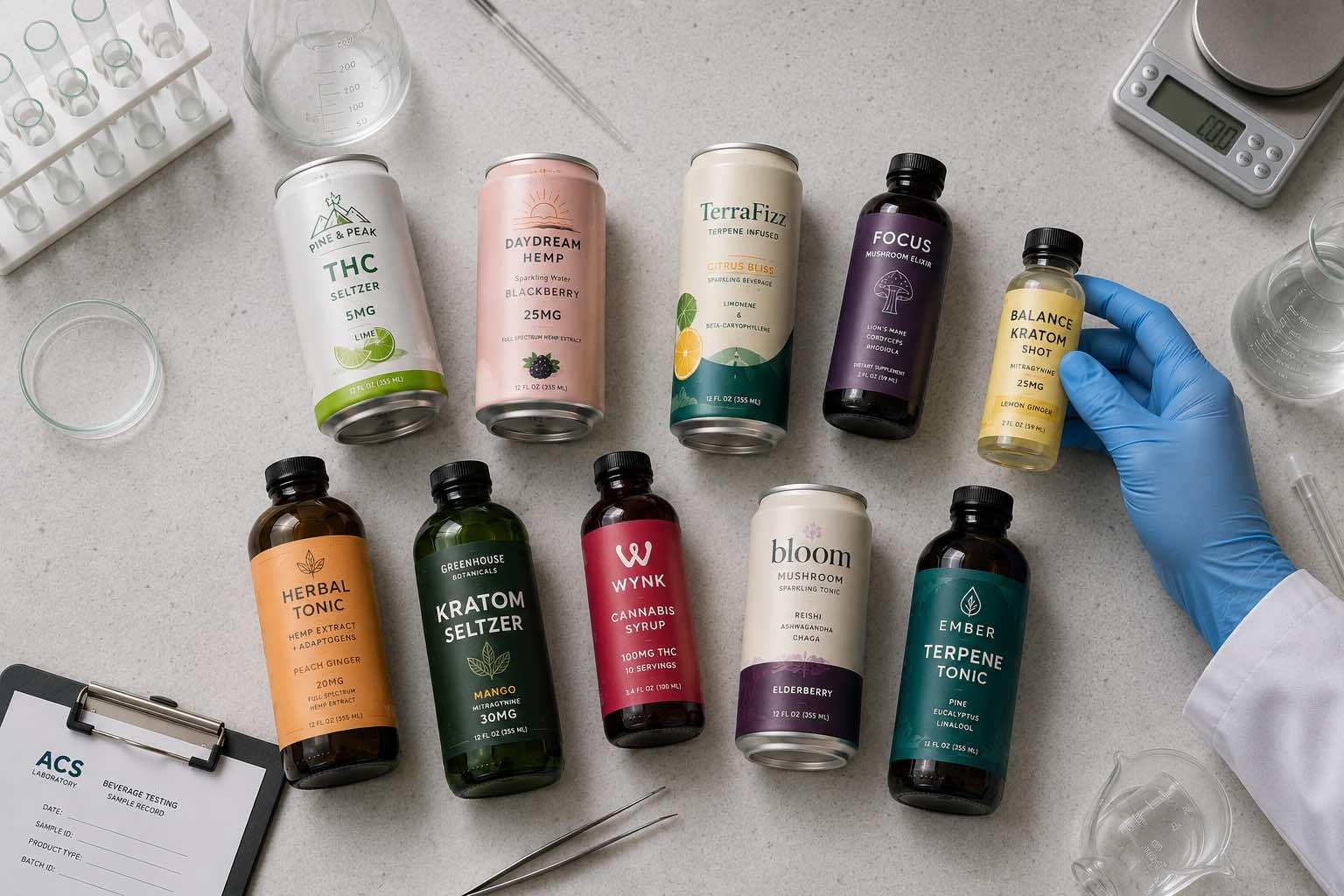
ACS Laboratory tests a wide range of kratom sample types for brands, manufacturers, and distributors selling into retail and e-commerce markets nationwide.
Common sample matrices include:
- kratom powder
- capsules
- extracts
- liquid products
- bulk raw material
- finished packaged goods
Testing may include:
- 8-alkaloid kratom potency testing
- heavy metals screening
- microbiological testing
- pathogenic screening
- pesticide analysis
- residual solvent testing
ACS Laboratory accepts these formats and processes each sample using validated methods designed for that specific matrix.
Why Proper Kratom Sample Submission Matters
Proper kratom sample submission helps you avoid delays, protect your data, and ensure your results reflect the actual quality of your product. Lab testing works best when the sample, documentation, and handling all align from the start.
Certain submission issues can slow intake or interrupt testing:
- Missing or unclear order details
Gaps in your chain of custody or vague testing selections make it difficult to assign the correct panel and move your sample forward. - Label and portal misalignment
If the product name, batch ID, or test request does not match exactly, the intake team must pause for verification. - Inconsistent or hard-to-read entries
Unclear identifiers or formatting issues increase the risk of processing errors and reporting delays.
Other mistakes can directly impact sample integrity:
- Inadequate containment
Loose or non-airtight containers allow kratom powders and extracts to absorb humidity or oxidize, which can affect alkaloid stability and overall test accuracy. - Cross-contamination risks
Improperly sealed materials can affect neighboring samples and compromise results, especially for microbiology or heavy metal testing. - Not enough material for a full analysis
Sending too little material may prevent the laboratory from completing all required analyses, including multi-alkaloid potency and contaminant screening.
Step-by-Step Process
Step 1: Prepare Your Kratom Sample
Start by preparing a kratom sample that reflects the batch you plan to sell.
Here’s how:
Mix your material before packaging
Blend powders or bulk material thoroughly to evenly distribute alkaloid content and contaminants throughout the sample.
Gather the correct sample size for your product type
Bulk powder and raw material require more volume than capsules or concentrated extracts. Providing enough material ensures the lab can complete full alkaloid profiling and contaminant testing.
Use separate containers for each product or batch
Place each sample in its own sealed container to prevent cross-contamination, especially for microbiological and pathogen testing.
Package the sample to protect it during transit
Use airtight, durable containers to limit exposure to air and moisture, as these factors can affect alkaloid stability and overall test accuracy.
Label the sample clearly and match it to your order
Include your company name, product name, batch or lot ID, date, and requested test panel. All details should match your portal submission to avoid delays in intake.
Step 2: Complete Your Order and Chain-of-Custody
Complete your order and chain-of-custody (CoC) details before shipping your kratom sample. This step creates the official record that the laboratory uses to track your sample from intake through final reporting.
Here’s how:
Create or log in to your client portal account
Register through the ACS Laboratory client portal to submit your order and manage all sample documentation in one place.
Enter product and batch details accurately
Provide the product name, batch or lot ID, product type, and contact information. These details must match your physical sample label exactly.
Select the correct testing panel
Choose the testing services that align with your product, such as alkaloid potency, heavy metals, microbiology, pesticides, or residual solvents.
Complete chain-of-custody information
Include the collection date and time, who collected the sample, where it was collected, and any required transfer signatures to support traceability and data integrity.
Review all information before submission
Double-check that all fields are complete, batch IDs match, and the testing panel is correct to avoid delays once your sample arrives.
Step 3: Ship Your Kratom Sample
Ship your kratom sample only after you complete preparation and documentation. Secure shipping helps prevent damage, protects sample integrity, and keeps your testing timeline on track.
Here’s how:
Add protective secondary packaging
Place the primary container inside a sturdy shipping box with padding to prevent movement, leaks, or breakage during transit. Avoid using padded envelopes for kratom samples.
Include accurate labeling on the shipment
Ensure the package label matches the information submitted in your order. Clear labeling helps the intake team quickly identify and process your sample. Always include the paperwork in your package for a clear chain of custody.
Choose a reliable shipping carrier
Send your sample using USPS, FedEx, or UPS. Select a service that provides tracking so you can monitor delivery and confirm arrival at the laboratory.
Ship to ACS Laboratory
Send your package to the ACS Laboratory facility in Sun City Center, Florida:
ACS Laboratory
721 Cortaro Drive
Sun City Center, FL 33573
Once your sample arrives, the laboratory team begins intake, verification, and testing preparation.
When and How You Receive Your Kratom Test Results
You can expect to receive most kratom test results within about 7 business days after your sample arrives at the facility. Turnaround time may extend if you request specialized panels or during periods of high submission volume.
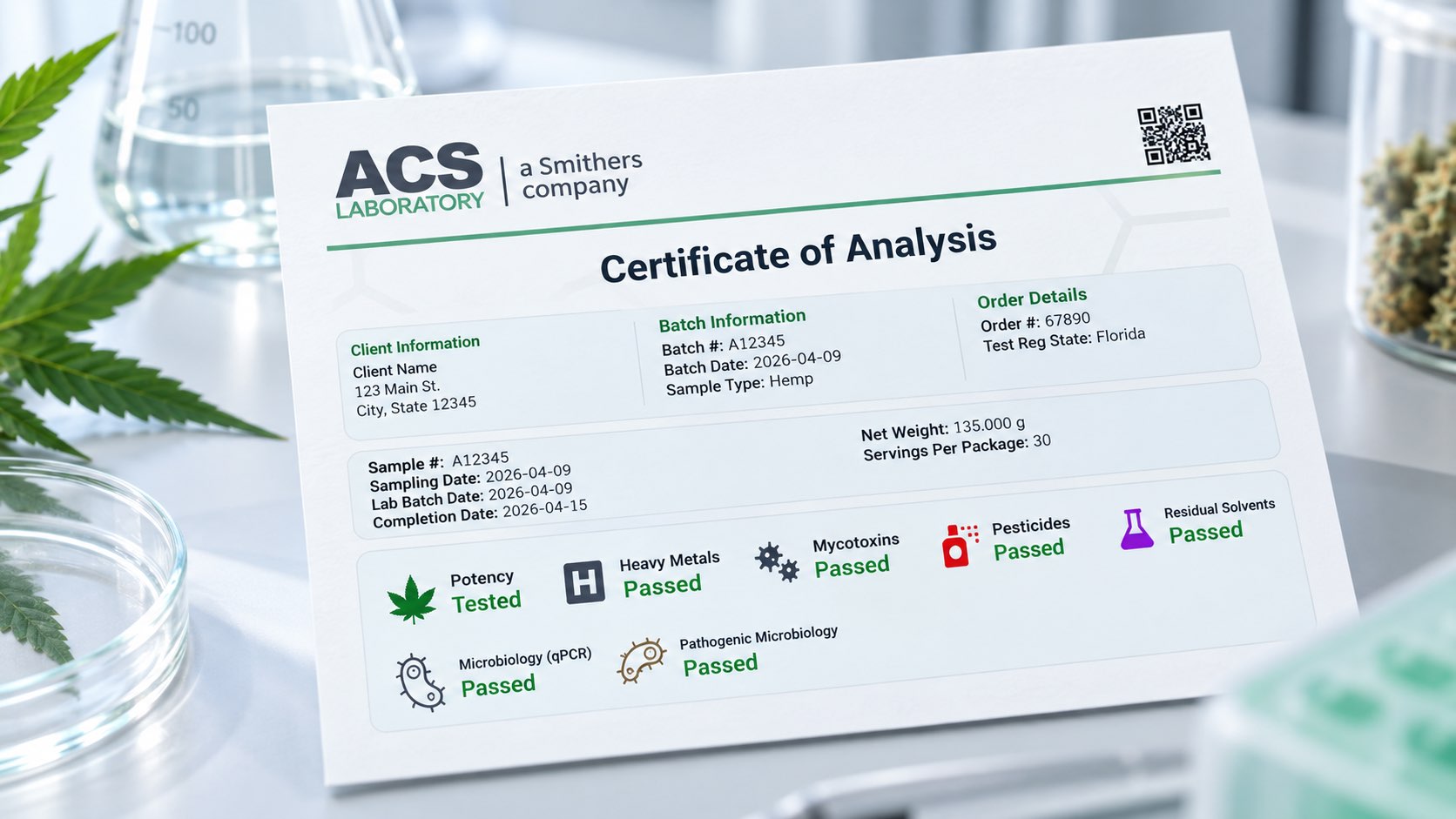
ACS posts the final results as a certificate of analysis (COA) in its secure client portal (MAHI) as soon as testing is complete. You can log in to view, download, and share your results immediately.
The COA shows exactly what you need to validate your product, including potency levels and any contaminants such as heavy metals, microbes, pesticides, or residual solvents.
You can also use ACS-issued QR codes to link your COA directly to product packaging or online listings. This allows retailers and customers to verify product quality in real time.
Ready to submit your kratom samples? Start your order through the client portal or contact ACS Laboratory to get set up and move your products into testing.
FAQs about Kratom Testing with ACS Laboratory
How do you become an ACS Laboratory client for kratom testing?
Start by submitting a request through the ACS Laboratory website or clicking “Start Testing.” An account specialist will guide you through setup, provide portal access, and help you select the right testing panels for your kratom products.
Does ACS Laboratory accept kratom samples from all 50 states?
Yes. ACS Laboratory accepts kratom samples from clients nationwide. You can ship samples using USPS, FedEx, or UPS as long as your products comply with your state and local regulations.
Is the submission process the same for raw kratom and finished products?
The overall process stays the same, but the sample type and testing panel may differ. Raw kratom material often focuses on alkaloid profiling and contaminant screening, while finished products may require additional testing based on formulation and packaging.
How much kratom do you need to send for testing?
Sample size depends on the product type and requested tests. Bulk powder typically requires more material than capsules or extracts to complete full alkaloid and contaminant analysis. Contact ACS Laboratory for more information.
What does kratom potency testing measure?
Kratom potency testing measures the concentration of key alkaloids, including mitragynine and 7-hydroxymitragynine. ACS Laboratory’s 8-alkaloid panel provides a more complete profile to help you understand product effects and consistency.
Can you use your COA for retail or wholesale distribution?
Yes. Many retailers and distributors require a certificate of analysis (COA) to verify product safety and quality. ACS Laboratory provides COAs with QR codes so partners and customers can easily confirm your results.

















.png)

.png)
.png)
.png)
.png)