Shelf life and stability testing help manufacturers determine how long products remain safe, potent, and within specifications under real-world storage conditions.
Real-time and accelerated studies generate the data needed to establish expiration dates, support storage recommendations, and evaluate long-term product performance.
Stability studies track changes in potency, terpene content, moisture, microbiology, packaging performance, and other quality indicators that can affect product safety and consistency.
Shelf life and stability data help brands make informed packaging decisions, support quality claims, strengthen consumer confidence, and prepare for regulatory requirements.
Summary
Shelf life and stability testing answer a critical question: How long will your product remain safe, potent, and true to label under real-world conditions?
At ACS Laboratory, cannabis, hemp, mushroom, and kratom brands rely on real-time and accelerated studies to establish expiration dates, evaluate packaging performance, and support product quality from production through final sale.
What Is Shelf Life & Stability Testing?
Shelf life and stability testing evaluate how a product performs over time and help determine how long it remains within specifications.
Laboratories store products under recommended conditions (room temperature or refrigeration) or controlled-stress conditions and evaluate them at predetermined intervals.
Controlled-stress conditions include:
Temperature fluctuations
Elevated heat
Humidity
Light exposure
Oxygen exposure
Analysts then monitor factors that can affect product quality, including:
Potency
Terpene content
Water activity and moisture
Microbiology
Mycotoxins
Physical appearance
pH levels for liquid formulations
Packaging performance
The resulting data show how a product changes during storage and whether it continues to meet quality standards throughout its intended shelf life.
Are Stability Testing and Shelf-Life Testing Different?
Stability testing measures how a product changes over time under defined storage conditions.
Shelf-life results use those data to determine how long the product remains within specifications and to establish expiration dates and storage recommendations.
Together, this information helps manufacturers understand product degradation, establish storage requirements, and support quality claims.
Real-Time vs. Accelerated Testing
Manufacturers typically use real-time stability testing, accelerated stability testing, or both to determine a product’s shelf life.
Real-Time Testing
Real-time studies store products under recommended conditions for the duration of their intended shelf life.
Common study periods include:
3 months
6 months
12 months
This approach provides the most direct evidence of how a product performs under normal storage conditions.
Accelerated Testing
Accelerated studies expose products to elevated temperature and humidity to simulate aging more quickly.
Common study periods include:
10 days to approximate 3 months of aging
20 days to approximate 6 months of aging
40 days to approximate 12 months of aging
Many manufacturers begin both studies simultaneously. Accelerated testing helps generate preliminary shelf-life projections, while real-time testing confirms product performance over time.
Why Shelf Life & Stability Testing Matter
Shelf life and stability testing help manufacturers protect product quality, support compliance efforts, and make informed formulation and packaging decisions.
Consumer Safety
Products can change significantly during storage.
Moisture can promote microbial growth. Active ingredients can degrade. Packaging materials can allow oxygen, light, or humidity to affect product quality.
Stability studies help identify these risks before products reach consumers.
Potency Preservation
Active compounds naturally change over time.
THC may oxidize into CBN. Other cannabinoids, mushroom compounds, and kratom alkaloids may also degrade during storage.
These changes can affect label accuracy, consistency, and consumer experience. Stability studies help manufacturers understand these changes and establish realistic shelf-life expectations.
Terpene Protection
Terpenes are volatile compounds that contribute to aroma and flavor.
Heat, oxygen, and light can accelerate terpene loss. Testing helps manufacturers identify packaging and storage conditions that better preserve product quality throughout its lifespan.
Shelf life and stability studies provide the data manufacturers need to support expiration dating, storage recommendations, and internal quality programs.
Smarter Packaging Decisions
Packaging plays a major role in product stability.
Poor packaging can expose products to oxygen, moisture, and ultraviolet light. Stability studies help manufacturers evaluate whether packaging materials adequately protect the formulation throughout its intended shelf life.
Stability testing may support decisions such as:
Using amber glass to reduce light exposure
Selecting oxygen-resistant closures
Choosing moisture-resistant packaging materials
Evaluating specialized liners for advanced delivery systems
These insights help manufacturers improve product performance and extend shelf life.
Special Considerations for Advanced Delivery Systems
Some products require additional stability evaluations due to their formulation or delivery method.
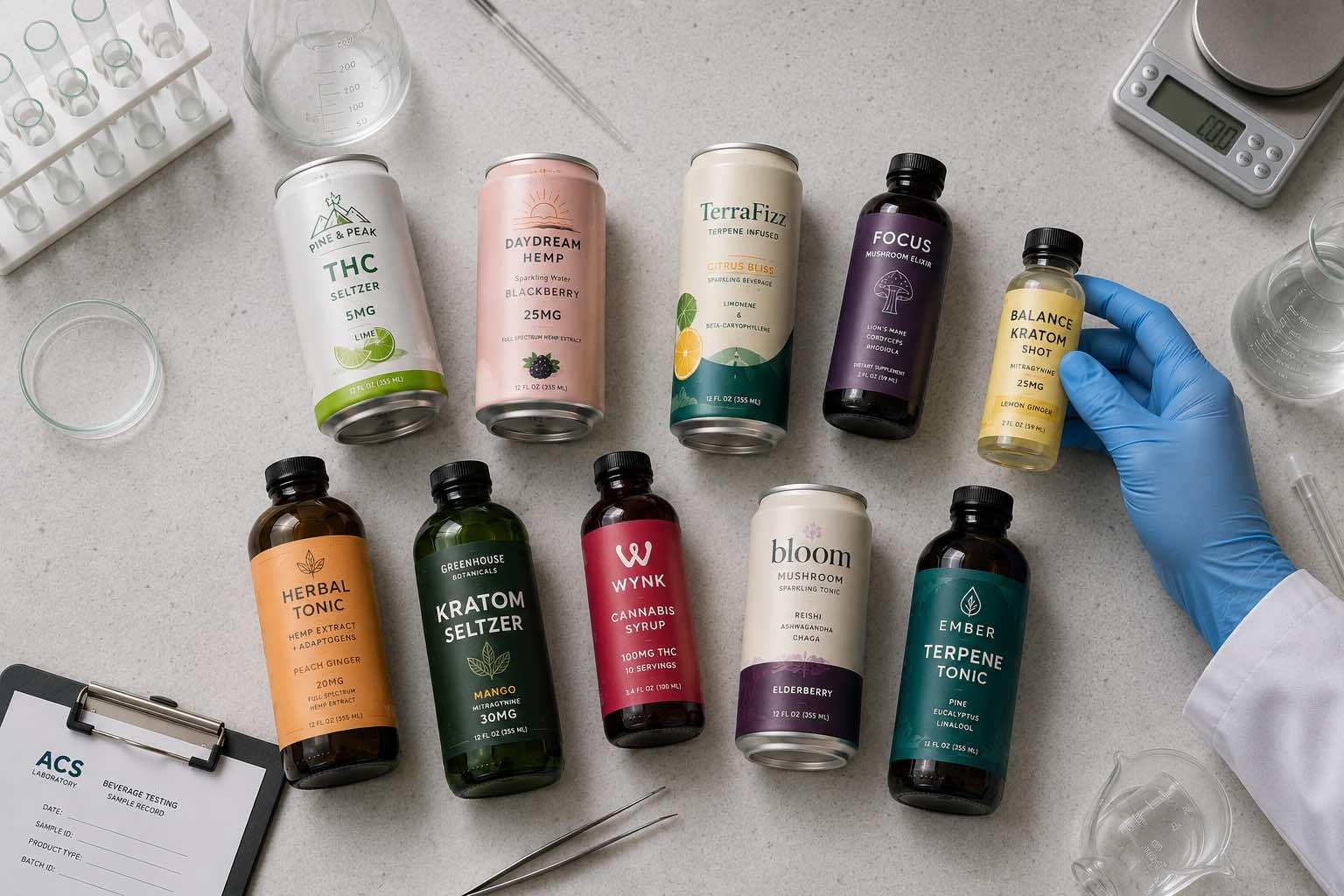
Water-based beverages may face challenges with microbial growth and pH stability.
Transdermal patches depend on adhesive performance and controlled-release characteristics.
Inhalers must maintain dose consistency and chemical stability under pressure.
These products often require additional monitoring to confirm they remain safe, effective, and within specifications throughout their intended lifespan.
How ACS Laboratory Conducts Shelf Life & Stability Testing
ACS Laboratory conducts shelf life and stability tests using environmental chambers that simulate both real-world and accelerated storage conditions.
Analysts evaluate products at predetermined intervals and measure changes in potency, moisture levels, microbial growth, physical characteristics, and other quality indicators. The resulting data support expiration dating, storage recommendations, packaging validation, and quality assurance programs across cannabis, hemp, mushroom, and kratom products.
The Bottom Line
Shelf life and stability testing help manufacturers understand how products change over time and how long they remain within specifications.
Brands that invest in these studies can make more informed expiration claims, improve packaging decisions, strengthen consumer confidence, and support long-term product quality.
Contact ACS Laboratory to learn more about Shelf Life & Stability Testing services.
Need a Test or Have a Question
Call Us at 813-670-9197 or Click to send us a message.












.jpg)





.png)


.png)
.png)
.png)
.png)