Vape products are among the most popular hemp and cannabis products that consumers reach for. Yet they carry contamination risks that most laboratory testing programs don’t always catch.
The problem is not only what goes into the oil. It is also what the device itself adds over time. A growing body of peer-reviewed research shows that heavy metals migrate from vape hardware into the oil and into the aerosol a person inhales. For labs and brands serious about quality, comprehensive vape testing is a must.
The Four-Metal Testing Standard Leaves a Gap
Regulations in many states only require testing hemp and cannabis products for four heavy metals. Arsenic, cadmium, lead, and mercury. (source) These four make sense when the main concern is contamination drawn up from soil, water, or fertilizer. The Cannabis sativa plant is a known hyperaccumulator (it readily absorbs contaminants), so testing the flower and concentrate for these elements provides a reasonable baseline.
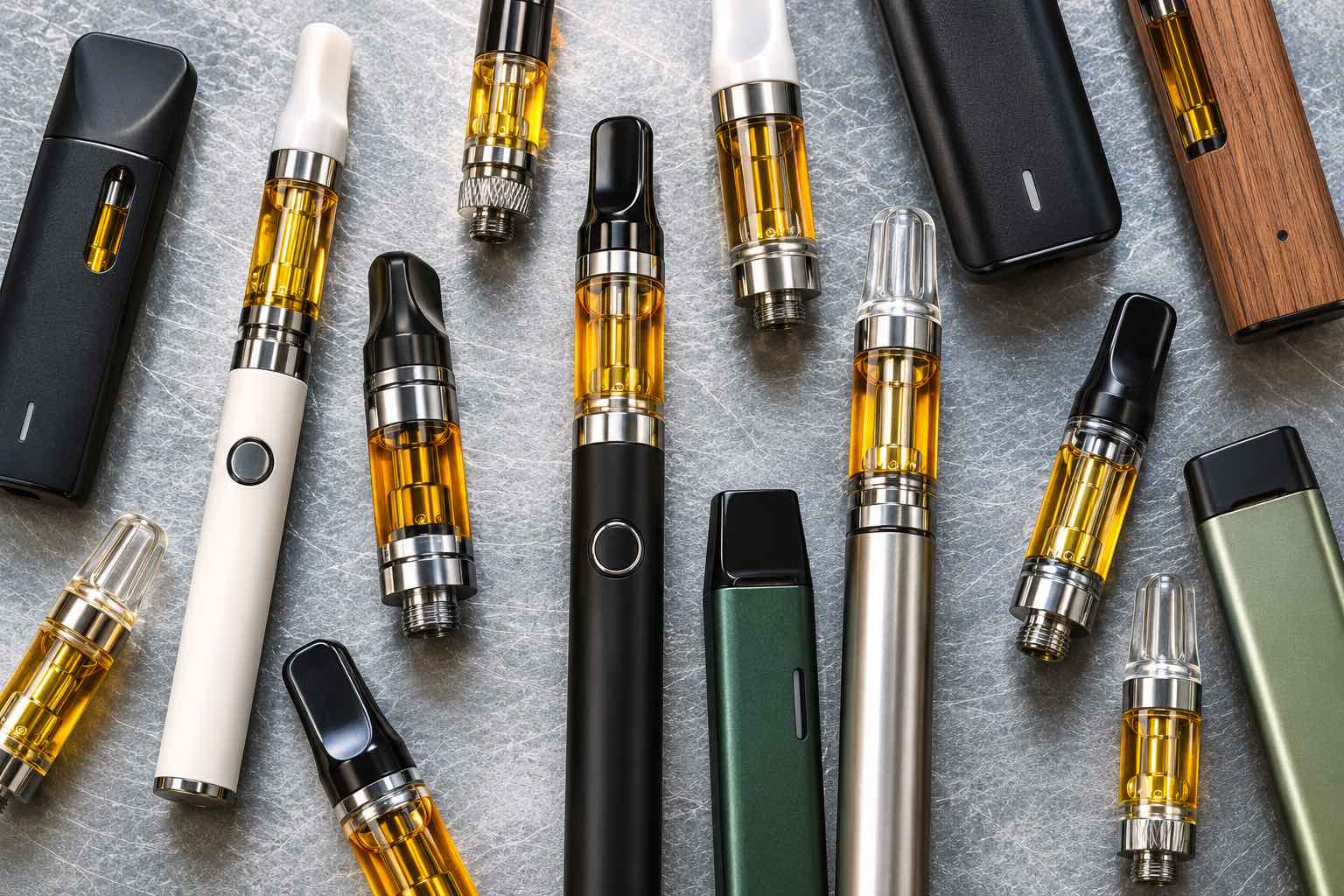
But vape products introduce a second pathway of contamination that this panel was never designed to address. The cartridge itself is made of metal. Coils, solder joints, and housing all sit in direct contact with the oil for weeks or months.
When those components corrode or heat, they leach metals that the standard four-metal panel does not even look for.
What the Research Shows About Vape Hardware Contamination
The evidence here is specific and recent. A 2025 study in Scientific Reports, “Tracking metal presence in cannabis vaping products from source to inhalation,” found that metals from device components, particularly cobalt, nickel, and zinc, accounted for much of the variability among products. (repeated source)
The authors traced contamination from the raw material all the way through to the inhaled aerosol, and the hardware emerged as a major contributor.
Earlier work set the stage. A study in Chemical Research in Toxicology, “Metals in Cannabis Vaporizer Aerosols: Sources, Possible Mechanisms, and Exposure Profiles,” tested regulated cartridges and found that chromium, copper, and nickel, along with smaller amounts of lead, manganese, and tin, migrated into both the oil and the inhaled vapor. (source)
In some cases, the inhaled amount approached or exceeded regulatory reference levels.
A 2025 scoping review in The Scientific World Journal, titled “Heavy Metals in Cannabis Vapes and Their Health Implications,” synthesized this literature. (source) It reported that the structural elements of cartridges leach nickel, chromium, lead, cobalt, cadmium, and copper into the aerosol as fine particles.
Several of these metals pose well-documented health risks, from respiratory irritation to long-term organ and neurological effects with repeated exposure.
Why Vape Contamination Changes Over Time
One of the most important findings across this research is that metal contamination is not fixed. It develops over time. The scoping review noted that leaching worsens with heat and with storage duration. (source) Cartridges held for months showed:
higher concentrations of copper and nickel than at the point of manufacture
newly leached metals like lead and tin.
Warmer storage is pushing those numbers higher still.
This changes what a meaningful heavy metal test looks like. A clean result on the day of production does not guarantee a clean product on a dispensary shelf in July, or in a consumer’s warm car.
A single release-day measurement is a snapshot of a process that keeps moving. That is why shelf-life and stability testing matter so much for vapes specifically. Measuring a product at release and again over its expected life captures the leaching curve rather than a single favorable moment.
Vitamin E Acetate Dangers
Heavy metals are the clearest hardware-driven risk, but they are not the only additive concern. Vitamin E acetate, a thickening and cutting agent, was strongly linked to the 2019 outbreak of e-cigarette, or vaping, product use-associated lung injury, known as EVALI.
The Centers for Disease Control and Prevention identified vitamin E acetate in lung fluid samples from affected patients (source), and a New England Journal of Medicine study confirmed its presence in bronchoalveolar lavage fluid across patients from multiple states. (source)
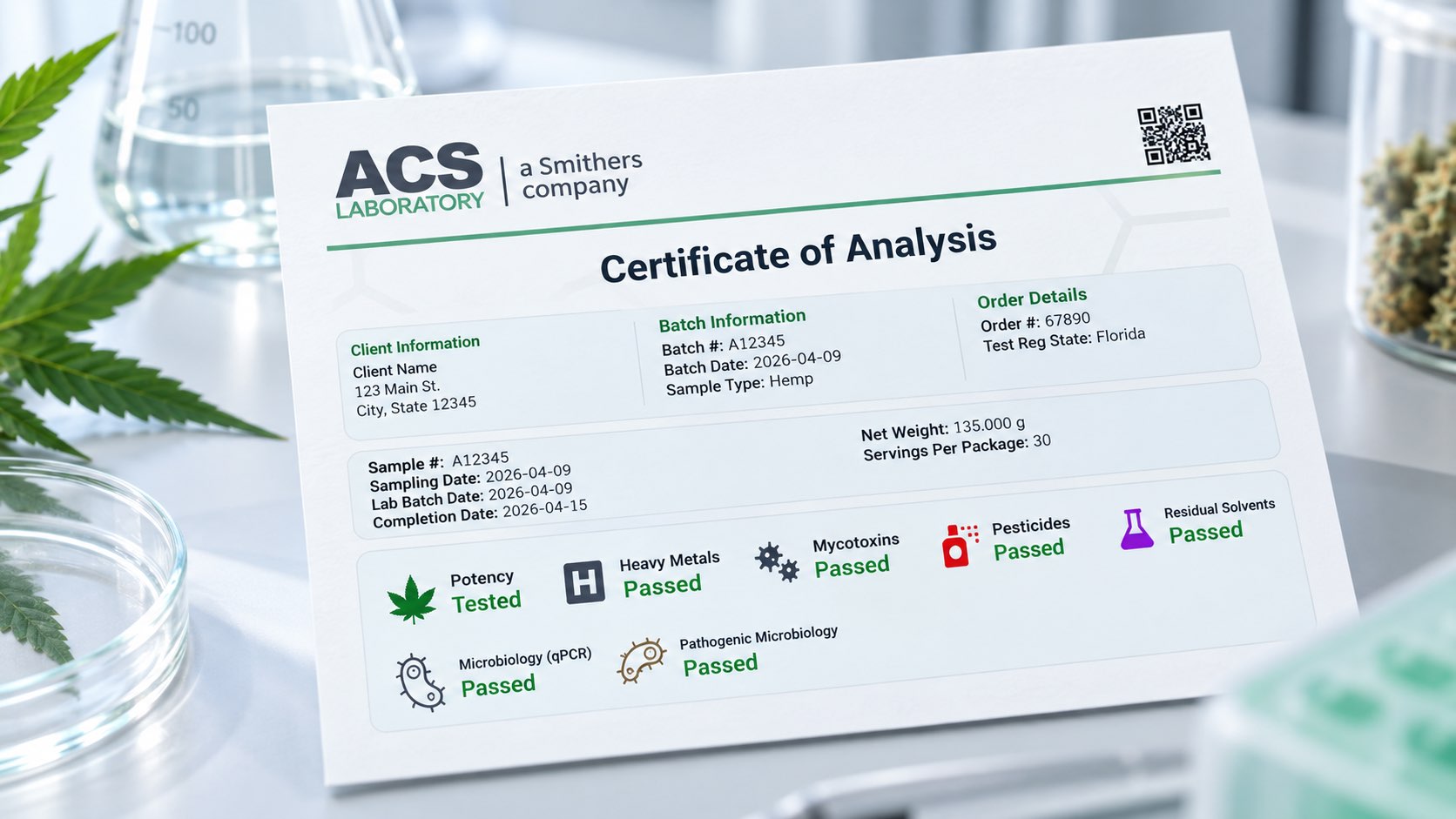
For hemp brands that want deeper coverage, ACS Laboratory can test up to eight heavy metals, adding platinum, zinc, and manganese.
That range reflects the metals the research keeps flagging, giving brands a realistic path to comprehensive screening rather than a minimum-compliance checkbox. The lab performs this analysis using ultra-high performance liquid chromatography with ultraviolet detection.
The research on cannabis vape quality has moved well past the four-metal mindset. Hardware leaks, contamination climbs over time, and additives carry their own risks. Brands that test accordingly protect both their consumers and their reputation. ACS Laboratory has the panels, the stability testing, and the additive screening to meet that standard.
Contact ACS Laboratory to build a vape testing program that reflects what the science now shows.
Frequently Asked Questions
How do heavy metals get into vape products?
Cannabis plants absorb metals directly from the soil during growth, but vape hardware introduces a second route of contamination. Internal components like coils and solder joints react with vape oil, leaching metals directly into the liquid and inhaled aerosol over time.
Why is a standard four-heavy metal testing panel insufficient for vape cartridges?
Standard regulatory panels screen only for soil-based contaminants like arsenic, cadmium, lead, and mercury. They completely miss hardware-derived toxins like nickel, tin, and chromium that migrate directly into the oil from the cartridge itself.
How does shelf storage affect vape contamination levels?
Metal leaching accelerates during long storage periods and at warm temperatures. A cartridge that passes initial release-day testing can accumulate dangerous levels of metal months later while sitting on a shelf.
Need a Test or Have a Question
Call Us at 813-670-9197 or Click to send us a message.


















.png)


.png)
.png)
.png)
.png)