Kratom products can vary significantly in alkaloid potency, making laboratory verification essential for consistency and consumer safety.
Heavy metals such as lead, nickel, arsenic, cadmium, and manganese appear in many kratom products due to environmental absorption and processing contamination.
Third-party kratom testing should include alkaloid profiling, heavy metal testing, microbiological testing, pesticide testing, mycotoxin testing, and residual solvent testing.
Transparent certificates of analysis (COAs) and QR-code verification help brands strengthen consumer trust and prepare for evolving regulations.
At-a-Glance Summary
Kratom products can vary dramatically from one batch to the next. Some contain inconsistent alkaloid levels that alter potency and effects, while others may carry heavy metals, microbial contamination, pesticides, or undisclosed additives introduced during cultivation and processing. These issues often remain invisible without laboratory testing.
Comprehensive laboratory analysis helps kratom brands verify potency, identify contaminants, and maintain product consistency in a market facing growing regulatory scrutiny. Clinical-grade testing also helps retailers and consumers make more informed decisions while strengthening trust throughout the supply chain.
This article examines the most common safety and quality issues in today’s kratom market and explains how third-party laboratory testing helps brands verify product quality and prepare for increasingly regulated retail environments.
Why Precision Kratom Testing Matters
Precision kratom testing matters because of the plant’s naturally complex alkaloid profile. Small shifts in potency or contamination levels can dramatically affect formula consistency and safety.
Potency Inconsistency Creates Risk
Kratom contains dozens of naturally occurring alkaloids, including mitragynine and 7-hydroxymitragynine (7-OH). Even minor concentration changes can significantly alter how a product feels or performs.
Some unverified products contain far more mitragynine or 7-OH than labels suggest (source)t. Others may include undisclosed psychoactive additives designed to mimic stronger kratom effects. These inconsistencies can create unpredictable consumer experiences and increase the risk of adverse effects. Verified kratom potency testing helps brands confirm exactly what exists in every batch.
Heavy Metals and Contaminants Remain a Serious Concern
Heavy metal contamination presents another major safety issue within the kratom industry. Research shows that some kratom products contain lead, nickel, arsenic, cadmium, and manganese at concerning levels. These metals remain toxic even at low concentrations and may accumulate in the body over time.
The United States Food and Drug Administration (FDA) has repeatedly expressed concern about heavy metal contamination in kratom products. Experts believe these contaminants may contribute to the growing number of kratom toxicity reports.
Contamination Often Goes Undetected Without Testing
Most contaminants cannot be seen, smelled, or identified without specialized instrumentation. Laboratory testing is the only reliable way to confirm whether a product contains harmful metals, microbes, pesticides, or residual solvents.
Accurate Kratom Alkaloid Profiling
Kratom testing lab ACS Laboratory uses high-precision liquid chromatography tandem mass spectrometry (LC-MS) instrumentation to analyze the plant’s primary alkaloids. The potency panel quantifies:
This testing panel provides a detailed snapshot that helps brands validate batch consistency and avoid unexpectedly strong formulations.
Heavy Metals Testing With Clinical Precision
ACS Laboratory uses inductively coupled plasma mass spectrometry (ICP-MS) to detect heavy metals in kratom at trace levels, parts per billion. This high-sensitivity method identifies even small concentrations of lead, nickel, arsenic, cadmium, chromium, and manganese.
Why Heavy Metals Frequently Appear in Kratom
Heavy metal contamination is a common problem in kratom because the plant naturally absorbs compounds from its growing environment. Much of the global kratom supply originates from regions with mineral-rich volcanic soil and irrigation water naturally high in nickel and manganese. Lead and arsenic may also enter the plant through polluted waterways or older agricultural practices.
Contamination can also occur during processing. Grinding machines, drying equipment, and storage containers may introduce additional metal particles into products before they reach retailers or consumers.
Which Kratom Products Carry the Highest Risk?
Raw kratom products often carry the greatest heavy metal contamination risk because they retain the full plant material. Common high-risk formats include:
Loose kratom powder
Powder-filled capsules
Compressed tablets
Extract-based products such as gummies, extract shots, tablets, and sublingual liquids often test cleaner because refinement removes much of the raw plant matter. Even so, routine verification remains essential, especially for frequent or long-term consumers.
Health Risks Linked to Heavy Metals
Heavy metal exposure carries meaningful toxicological concerns:
Lead may impair neurological and cardiovascular function
Nickel may strain the kidneys and the immune system with chronic exposure
Manganese may affect cognition and mood at elevated levels
Arsenic and cadmium carry long-term risks tied to organ damage and cancer
High-sensitivity testing helps brands identify supplier issues early, reduce cumulative consumer exposure, and support compliance with the emerging Kratom Consumer Protection Act (KCPA).
Microbiology, Pathogens, Pesticides, and Residual Solvents
Kratom’s long international supply chain exposes products to biological and chemical hazards at multiple stages. ACS Laboratory screens for contaminants that may develop during cultivation, drying, storage, manufacturing, or extraction.
Comprehensive screening helps brands align with Good Manufacturing Practice (GMP) standards and meet baseline retail and regulatory safety expectations.
Transparent, Consumer-Friendly COAs
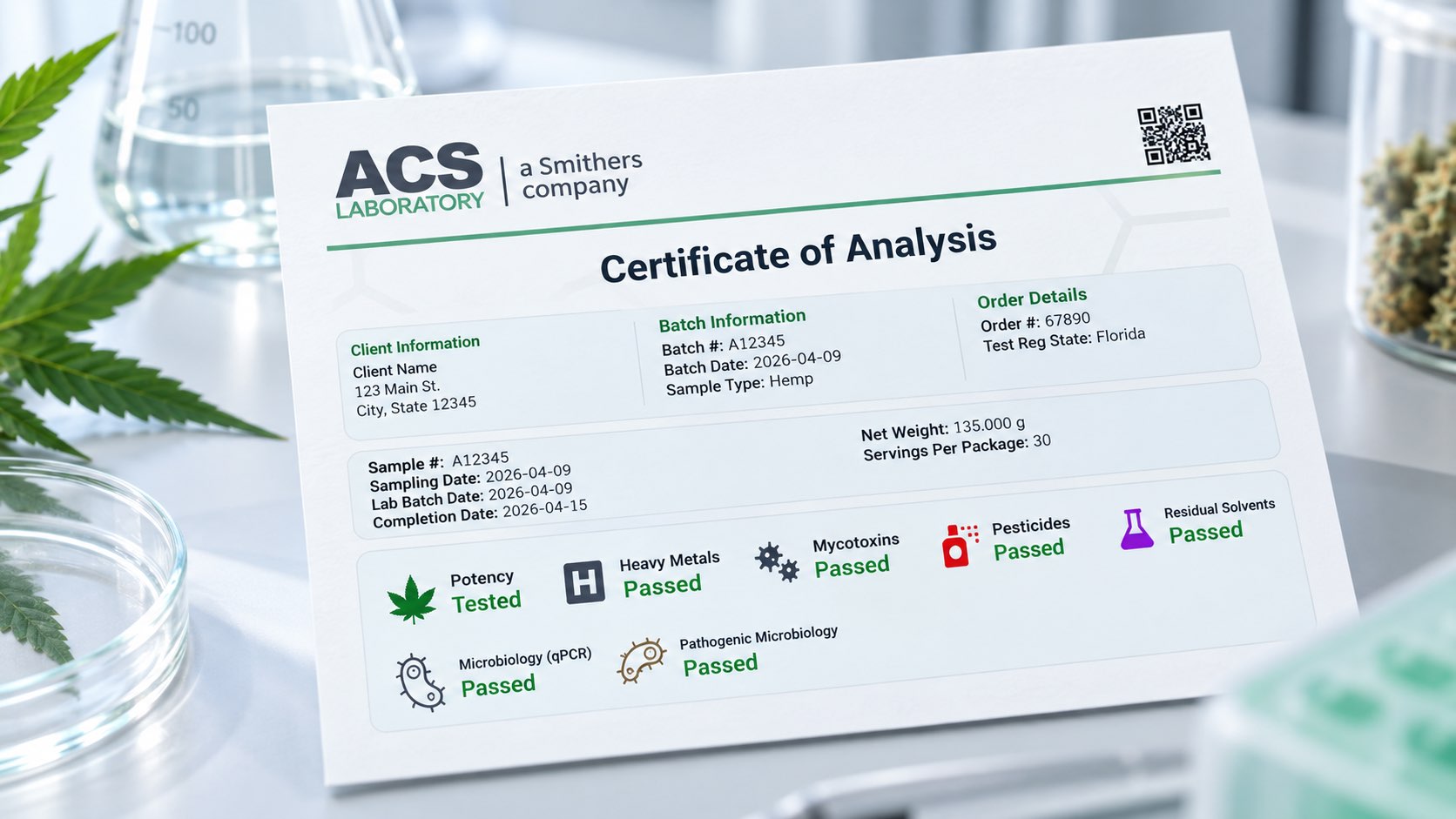
Every kratom batch tested at ACS Laboratory receives a detailed certificate of analysis (COA) and QR code published through a secure online portal. COAs include:
Potency data
Heavy metals results
Microbial screening
Pesticide analysis
Residual solvent findings
Brands can place QR codes directly on product packaging so consumers can instantly verify testing results before purchase. Blockchain-supported data security helps protect COA integrity throughout the supply chain.
Efficient Turnaround and Scientific Partnership
ACS Laboratory typically returns kratom testing results within seven to ten business days. A dedicated scientific team oversees each workflow and supports brands through result interpretation, supplier troubleshooting, and internal quality improvements.
This partnership-driven approach helps brands maintain consistency as regulations evolve and consumer expectations continue to rise.
Bottom Line
Kratom brands need clarity, consistency, and trusted science to operate responsibly in a rapidly growing market. Comprehensive laboratory testing verifies potency, identifies contaminants, and helps companies deliver safer, more reliable products batch after batch.
Brands that invest in transparent testing strengthen consumer trust, improve supplier accountability, and position themselves for long-term success as the industry matures.
Ready to Verify Your Kratom Products? Contact ACS Laboratory for comprehensive kratom testing that supports product safety, consistency, and consumer confidence.
Need a Test or Have a Question
Call Us at 813-670-9197 or Click to send us a message.



















.png)



.png)
.png)
.png)
.png)