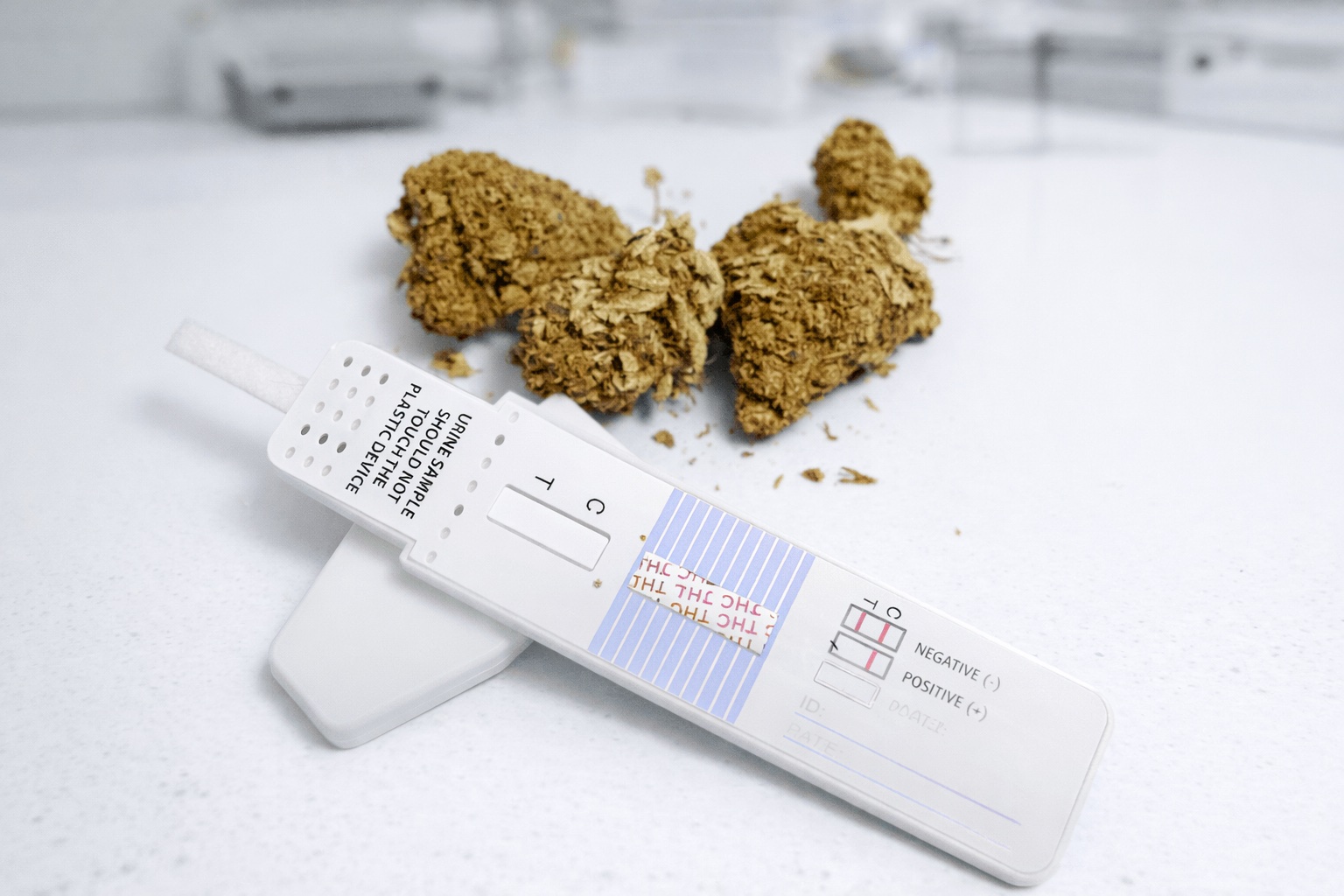
Hemp can show up on a drug test, but the outcome depends on chemistry, formulation, and testing method rather than legality. Drug tests are designed to detect THC metabolites, and many hemp-derived products contain enough THC or THC-like compounds to trigger detection. The best way to mitigate risk is to look for products that have undergone hemp testing and include a lab report that identifies the precise cannabinoids and their levels present.
This article examines whether hemp shows up on drug testing, including common derivative products like CBD, THCA, and Delta-8.
Can Hemp Products Cause a Positive Drug Test?
Yes, hemp products can cause a positive drug test, but the risk depends on what you use and how often you use it. Drug tests do not look at whether hemp is legal. Drug tests look for THC metabolites, and some hemp products (even CBD) contain enough THC or THC-like compounds to trigger detection (Henderson, 2001; DOT, 2020).
You are more likely to test positive when hemp products contain trace THC, are used daily, or are formulated as full-spectrum (whole plant) extracts rather than isolates (single compound).
Even products marketed as compliant or THC-free have been shown to cause positive results in real-world and clinical settings (Fortner et al., 1997; Dahlgren et al., 2020; USADA, 2023).
Factors that increase drug-test risk include:
- full-spectrum hemp oils and extracts containing the plant’s array of cannabinoids
- repeated or daily use over time
- products containing delta-8 or other THC variants
- inaccurate or misleading product labeling
How Drug Tests Detect THC
Standard urine drug tests do not measure THC itself. Urine drug tests look for 11-nor-9-carboxy THC (THC-COOH), which is the primary metabolite your body produces after THC is processed by the liver. This distinction matters because THC-COOH can remain detectable long after any noticeable effects are gone, and it can appear even when THC exposure comes from hemp-derived products rather than marijuana.
Most drug testing programs use a two-step process to determine THC presence.
Step 1: Screening
The first step is a screening test, usually an immunoassay, designed to quickly identify samples that may contain THC metabolites. These screening tests are sensitive but not very specific, which means they can react to cannabinoids like cannabidiol (CBD) products that contain trace THC or to delta-8-tetrahydrocannabinol, which is metabolized similarly to delta-9-THC.
Step 2: Confirmation
If you fail the screening test, the testing organization may order a confirmatory test. Confirmatory analysis uses more precise potency testing methods to measure the actual amount of THC-COOH in your urine. In some cases, this helps because confirmatory testing can rule out false positives caused by low-level or non-specific reactions.
In other cases, especially with repeated use of full-spectrum hemp products, confirmatory testing still comes back positive because enough THC-COOH has accumulated to cross the cutoff.
CBD and Hemp Oils: Do They Show Up on Drug Screens?
CBD and hemp oils create the most confusion because they all come from a compliant plant, but they are not formulated the same way. Some oils contain trace amounts of THC, and when you use them regularly, those small amounts can build up in your body over time.
The biggest difference comes down to how much of the plant is included in the final oil. Oils labeled as full-spectrum contain multiple cannabinoids, which increases drug-test risk compared to more refined options. Oils marketed as broad-spectrum or isolate reduce that risk, but they do not eliminate it entirely if labeling or manufacturing is inaccurate.
Here is how the main oil types differ in drug testing risk:
- Full-spectrum oils contain multiple cannabinoids, including trace delta-9-tetrahydrocannabinol, and carry the highest risk of a positive drug test with repeated use
- Broad-spectrum extracts remove THC but retain minor cannabinoids and carry a lower but not zero risk, especially if labeling is inaccurate
- Cannabidiol isolates contain only CBD when properly produced and tested and carry the lowest risk, though contamination can still occur
Reduce THC Labeling Risk
Catch hidden THC, THCA conversion, and batch variation before products reach consumers.
Verify Hemp Potency
Does Hemp-Derived THCA Show Up on a Drug Test?
Yes, tetrahydrocannabinolic acid (THCA) products can show up on a drug test once they are heated and converted into THC.
Tetrahydrocannabinolic acid is the natural, non-intoxicating form of THC found in high quantities in raw hemp and cannabis flower. When tetrahydrocannabinolic acid is exposed to heat through smoking, vaping, or baking, it converts into delta-9-tetrahydrocannabinol (regular THC). Your body then metabolizes that THC into THC-COOH, which is the marker drug tests are designed to detect (Henderson, 2001; Tennessee Poison Center, 2022).
THCA flower and concentrates carry a high testing risk because they are almost always heated before use and often used repeatedly.
The bottom line: Once conversion occurs, drug tests cannot tell whether the THC came from marijuana, hemp, or THCA-labeled products, which is why these products frequently lead to positive drug test results.
Delta-8 and Hemp-Derived THC Variants
Yes, delta-8-tetrahydrocannabinol (Delta-8) commonly shows up on a drug test, even when it is derived from hemp. Delta-8 may feel milder than delta-9-tetrahydrocannabinol, but drug tests are not designed to tell the difference between where THC came from or which version you used.
Delta-8 is metabolized in the body in a way that closely mirrors delta-9. As a result, your body produces THC-COOH, the same metabolite standard urine drug tests are designed to detect. Once that metabolite is present, the test reads positive, regardless of whether the THC came from delta-8, marijuana, or another hemp-derived source (Tennessee Poison Center, 2022; DOT, 2020).
Other hemp-derived THC variants carry a similar risk.
- Delta-10-tetrahydrocannabinol, which is structurally similar to THC and may produce overlapping metabolites, may cause a failed test.
- THC analogs and isomers, including delta-8-tetrahydrocannabinol, delta-10-tetrahydrocannabinol, delta-6a,10a-tetrahydrocannabinol, exo-tetrahydrocannabinol, delta-9 isomers formed during processing, THC-O-acetate, tetrahydrocannabiphorol (THC-P), tetrahydrocannabutol (THC-B), and other side-chain or positional variants, can trigger failed drug tests because many urine screens detect THC-related metabolite patterns rather than a single named compound.
- Products labeled as “THC-free”, including some CBD oils, gummies, and vapes, can still cause positive drug tests when they contain trace or undisclosed THC variants introduced during extraction or manufacturing.
Why Hemp Testing Certificates of Analysis Matter
Inaccurate labeling is one of the main reasons hemp products lead to unexpected drug-test positives.
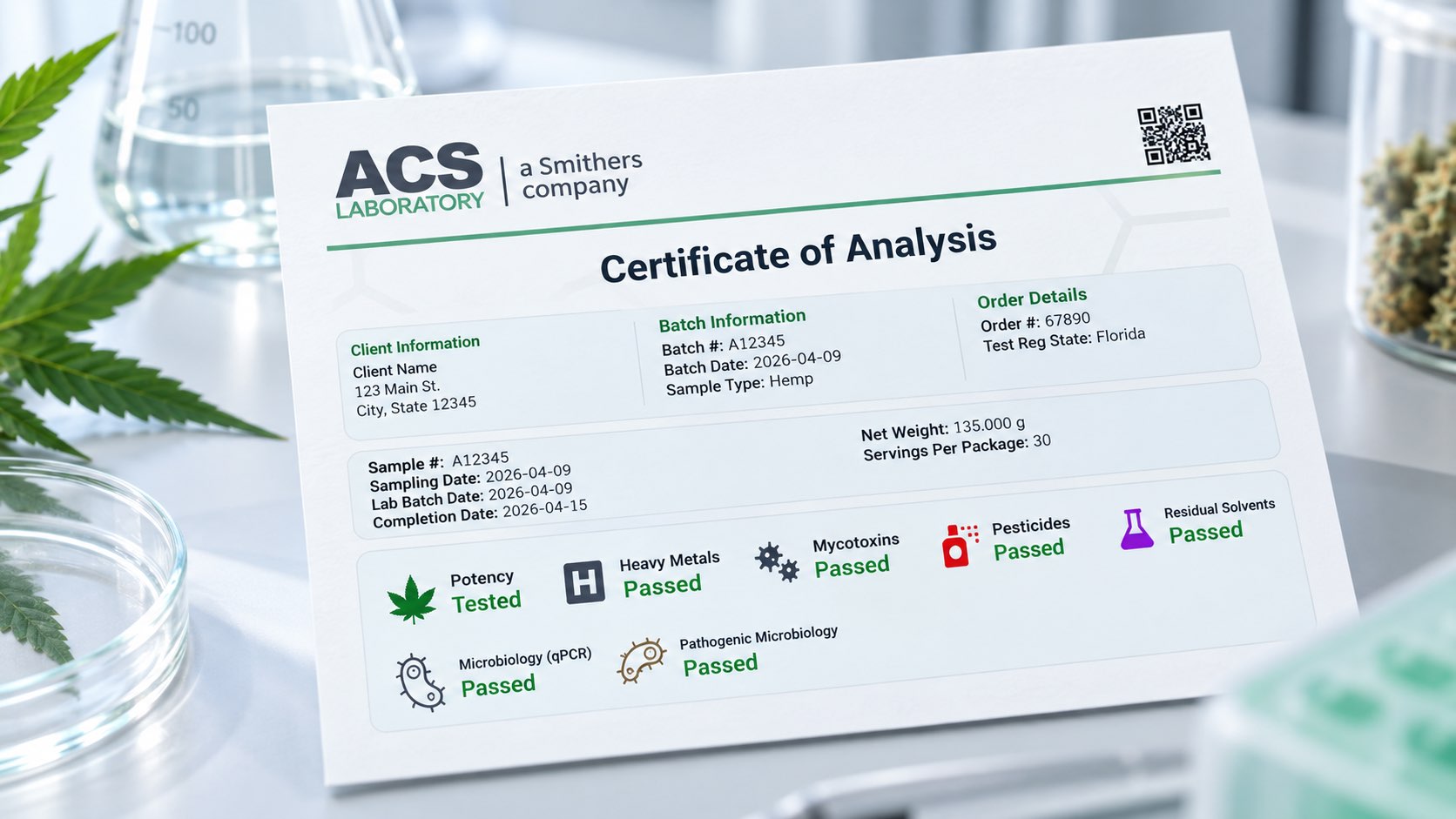
Product labels can understate THC content, omit minor cannabinoids, or fail to reflect batch-to-batch variation. A Certificate of Analysis (COA), or lab report, reduces that risk by showing what an independent hemp testing laboratory detected in the product, rather than what the label claims.
Choosing products that have undergone hemp testing and offer a COA is the best way to protect yourself from drug testing mishaps.
What a certificate of analysis can and cannot tell you
A COA can confirm cannabinoid levels for a specific batch, including whether delta-9, delta-8, or other THC variants are present.
A lab report cannot guarantee a negative drug test, predict how your body metabolizes cannabinoids, or account for THC accumulation with repeated use. Even accurately tested products can still lead to positive results over time.
How to find and read a COA
A COA should be easily accessible and clearly linked to the product you are purchasing. The product label should include a batch or lot number and feature a QR code or website link to access the report.
Once you’ve accessed the COA, review the cannabinoid panel and confirm that THC values match the product’s claims, paying close attention to delta-9 THC, THCA, Delta-8 and other THC variants.
What to Do if You Have Failed a Drug Test From Using Hemp Products
Failing a drug test after using hemp products can feel confusing and stressful, especially if you believed the product was compliant or THC-free. The most important step is to stay grounded and focus on understanding the type of test used and the options, if any, available in your specific situation.
Steps to consider after a failed test:
- Ask about confirmatory testing. If the result came from an initial screening test, find out whether confirmatory testing was performed or can be requested, since confirmatory tests provide a more precise measurement of THC metabolites.
- Review the product and its documentation. Locate the Certificate of Analysis for the exact batch you used and check whether any form of THC or related variants were detected, even at low levels.
- Speak with a healthcare professional. A clinician can help you understand how hemp-derived cannabinoids behave in the body, how long metabolites may remain detectable, and how to reduce future testing risk if you plan to stop or change products.
- Reevaluate ongoing use. If hemp or CBD products are repeatedly leading to positive results, it may be time to pause use entirely, especially in jobs or programs with zero-tolerance testing policies.
Confirm THC potency and batch consistency with independent hemp testing from ACS Laboratory.
FAQs
Does CBD show up on a drug test?
Pure cannabidiol (CBD) does not trigger drug tests because standard tests look for THC metabolites, not CBD itself. Problems arise when CBD products contain trace or undisclosed THC, which can be metabolized into THC-COOH and lead to a positive result.
Can legal hemp still fail a drug test?
Yes, legal hemp can still lead to a failed drug test because workplace and regulatory tests are based on detected THC metabolites, not legality. Drug testing programs do not consider whether a product was federally compliant or lawfully purchased.
Will THCA flower cause a positive drug test?
Tetrahydrocannabinolic acid (THCA) flower can cause a positive drug test once it is heated and converted into THC. After conversion, your body metabolizes THC into THC-COOH, which is what drug tests detect.
Does delta-8 stay in your system as long as THC?
Delta-8 is metabolized in a similar way to delta-9 THC, which means detection timelines can be comparable. The exact duration varies by individual, frequency of use, and dose, but positive tests can persist well beyond the period of noticeable effects.
How can I lower drug-test risk when using hemp?
Lowering risk starts with choosing products that minimize THC exposure, such as isolates, and reviewing Certificates of Analysis for each batch. Even then, no hemp product is guaranteed drug-test safe, so realistic expectations and caution are essential when testing consequences matter.
Which hemp products are safest in terms of drug testing?
Hemp products made from hulled hemp seeds that are lightly processed and not concentrated, such as filtered hemp seed beverages or occasional hemp seed foods, appear to carry the lowest drug-testing risk. Products become riskier as processing, heating, or concentration increases, especially with hemp seed oils, full-spectrum CBD oils, and extracts used daily.














.png)

.png)
.png)
.png)
.png)